3 Times Early Americans Talked About Ice & Snow
3 Times Early Americans Talked About Ice & Snow
Jan 29, 2026
Ice and snow in Colonial Williamsburg.
As I sat in our warm home last weekend, drinking peppermint tea and thinking about blog content, I decided to search "ice" and "snow" on one of my favorite websites: the Founders Archives. It's a much cozier prospect to read indoors instead of wander Colonial Williamsburg (CW) in the frigid cold weather.
I've read anecdotes from the past talking about the weather. So why not shift the stress of the moment into researching accounts of winters past?
We were preparing for a power outage- without a fireplace it's a different kind of stress for sure! But before there was a power grid, fire was the common denominator in keeping warm during what I'm calling arctic blasts.
Here it is: a post sharing some musings based on specific accounts of cold weather in early America. Grab a hot beverage, and be grateful for heat (I'm hoping as you read this, you have power-- and heat!).
RELATED: Click here to open the Founders Archives site in a new tab.
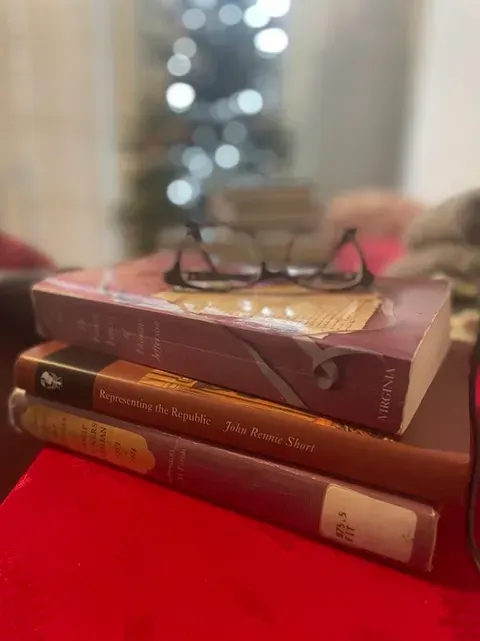
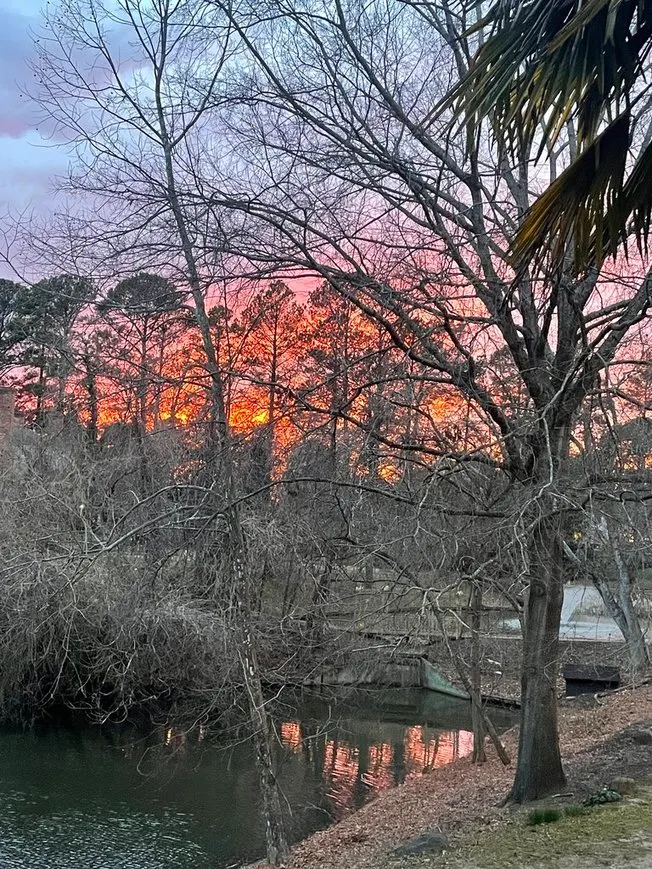
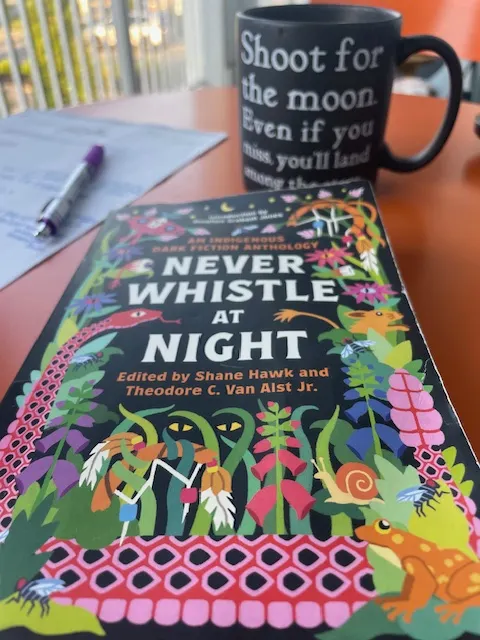
My view starting this blog post.
Disclaimer: As a blogger, I use affiliate links sometimes! I may receive commission from purchases I share; it does not change your price but sometimes you might get a discount.
Excerpt One: Losing a cow.
The letter cited:
Abigail Adams to her husband, John, our second U.S. President. Written March 26, 1777.
The excerpt about cold weather.
"You mention my purchaseing a Ticket. I am determined to do it if I find my self able, after having paid the Rate bill, which tis said will amount to near 30 pounds, so that I must be very parsimonious. I met with the Misfortune of loosing a Cow upon the Ice this winter, Ruggles by name, and [having] 4 to make her place good purchased an other which cost me 5 pound’s.—You know I have ever made it a Rule not to involve an absent Friend in debt."
Click here to read the letter in full by opening it in a new tab.
The context:
Being frugal. Or cautious at the least. Before "purchasing a ticket," Mrs. Adams wants to be sure her finances are in order. The sudden loss of a cow due to the ice meant an unplanned expense.
You might know that the Adams' famously wrote each other and so many of their revolutionary-war-era letters survived. Being apart seemed insanely difficult for this couple, yet they seemed to spend much of their life separated by miles of land, and, sometimes, an ocean.
One fantastic insight of many about the personality and character of our 2nd "first" lady, Abigail Adams, can be drawn from this itty-bitty excerpt.
Click here to read more on this blog featuring the words of Abigail.
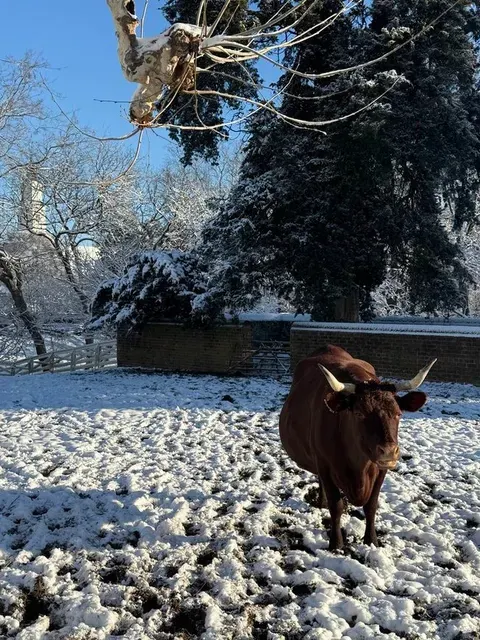
Perfectly safe cow in sun & snow, CW. Photo credit: Tom McAuliffe
Excerpt Two: Making farming for Washington difficult.
The diary entry cited:
February 1, 1772
Click here for my source page on Founders Archives.
The words of Washington:
Feb. 1st. Snow still so deep that there was no passing from one place to another where there was no tract made. Day for the most part clear, tho’ the Sky lookd muddy. Weather Mild & wind what little there was Southerly.
The context:
If you dive deep into the writings of our first president, you'll find he wrote quite a bit about farming. And he was incredibly diligent about recording the weather.
In 1772, the snow that fell on Colonial Virginia was epic. I'm a nearly 40-year Michigander (prior to becoming a wholehearted Virginian in 2021!). Just like Virginia Living writer Hope Cartwright, I "pooh pooh the mere glaze of snow" we often get here.
RELATED: Read Hope's article about major snow in Virginia, including this storm.
Needless to say, this wasn't the typical "mere glaze" I've seen over the past 5 years in my new home state.
What I love about Washington's diary: most entries are like the one I dropped above. Concise descriptions of the situation and his environment; insight into the man and his priorities.
Were there entries about Valley Forge and Morristown (an often-cited "worse than Valley Forge" winter)? Of course!
But this 1772 diary entry from Mt. Vernon, is lesser-known and packs a punch in understanding 1) the weather but also 2) Washington's placement of value on recording it as the dedicated farmer he was.
As a side note, Jefferson's post-wedding trek from Charles City, Virginia to Monticello in this 1772 storm is often mentioned in relation to the deep snow that blanketed Virginia. The description by his daughter Martha is transcribed in one of my favorite reference books: The Family Letters of Thomas Jefferson.
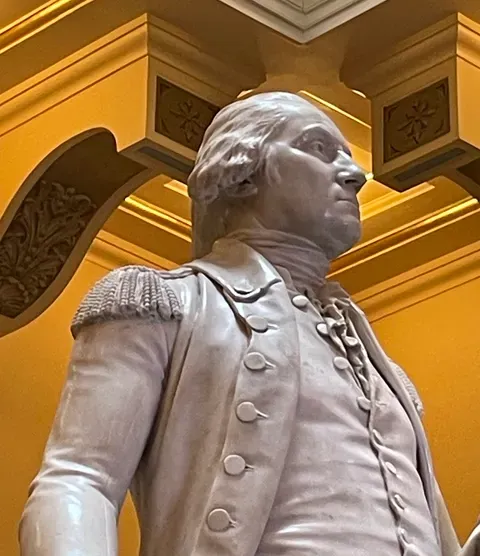
Washington sculpture by Houdon, Virginia State Capitol
Excerpt Three: No way to "Polar" regions!
The letter cited:
Thomas Jefferson to William Short, 24 November 1821, from Monticello.
The excerpt about cold weather:
"I do not admire your Canada speculation. I think, with mr Rittenhouse, that it is altogether unaccountable how any man can stay in a cold country who can find room in a warm one, and should certainly prefer to Polar regions of ice and snow, lands as fertile and cheap which may be covered with groves of olives and oranges."
The context:
Does it matter? The sentiment is clear! Just kidding; that's me projecting.
According to Monticello's website, William Short was often referred to by Jefferson as his adoptive son. Short served as a secretary to Jefferson in France during the mid-1780s. There was a familial connection between the two and Jefferson supported his career from the very start: Jefferson served as one of Short's examiners for passing the bar.
From what I'm gathering, William Short had settled in Philadelphia after spending many years abroad as a diplomat. He did die there at the age of 90 in 1849 and letters dated in the 1820s by Short were marked as being from Philadelphia.
Being a resident of Philadelphia may explain the mention and connection with Mr. Rittenhouse? (if you know more about Short, please comment and/or connect with me by messaging me on Instagram!)
In this November 12, 1821 letter from Short to Jefferson, he mentions ownership of land in Canada- giving context to Jefferson sharing his feelings about the place.
"In my tour of this summer I had intended to have included an excursion to Canada, where I have never been, & where I should not go merely as a tourist; all curiosity of that kind having now subsided with me. But I am an involuntary owner of a considerable body of land near the River S t Laurence, to which, it had been represented to me by my agent, it was necessary for me to go.
When on the S t Laurence, it is much the easiest & quickest route to return by the way of Montreal, taking advantage of the descent of the River & the steamboat on Lake Champlain. But when I had proceeded as far as Sackett’s harbour, I found that the season had so far advanced that it would be advisable to postpone going to the S t Laurence until the next year & therefore retraced my steps at that time."
Click here to open the full letter from Jefferson to Short, with notes, and citations, in a new tab. It does seem that although he was up for visiting his Canadian property, he too was hesitant on cold weather seeing the "season had so far advanced."
Closing it out.
I hope you enjoyed a few words about cold weather from early Americans, learning about the people and bringing a little relevance and relatability to reading history.
A few calls to action if you like reading words from the past:
Grab one of these books featuring Jefferson- because he loved nature and there are so many of his words that survived.
- The Family Letters of Thomas Jefferson
- Thomas Jefferson's Garden Book
- The Adams-Jefferson Letters: The Complete Correspondence Between Thomas Jefferson and Abigail and John Adams
Read more posts on this blog based on letters from the past:
- My book review on Philip Vickers Fithian's journal and letters compiled.
- My book review on Elizabeth Keckley's memoir.
- My blog post about seeing rare documents from the U.S. Civil War.
Are you enjoying the blog? Use my online tip jar and buy me a coffee:

There is a huge practical disclaimer to the content on this blog, which is my way of sharing my excitement and basically journaling online.
1) I am not a historian nor an expert. I will let you know I’m relaying the information as I understand and interpret it. The employees of Colonial Williamsburg base their presentations, work, and responses on historical documents and mainly primary sources.
2) I will update for accuracy as history is constant learning. If you have a question about accuracy, please ask me! I will get the answer from the best source I can find.
3) Photo credit to me, Daphne Reznik, for all photos in this post, unless otherwise credited! All photos are personal photos taken in public access locations or with specific permission.