Bacon’s Rebellion at 350: Lecture Lessons and New Perspectives
Bacon’s Rebellion at 350: Lecture Lessons and New Perspectives
Apr 30, 2026
Gaining knowledge of Bacon's Rebellion through a lecture.
Opportunity.
When the opportunity to gain the foundational knowledge of Bacon's Rebellion presented itself, I jumped at it.
Preservation Virginia and vital partnerships created the chance for me (and all of us) to understand this possible "first" revolution against "tyranny" in our United States.
Yes, friends: a century before Thomas Jefferson famously lifted his quill to declare American Independence. The feelings toward a mother country were always complex, not just in the mid-late 18th century.
This first lecture in a spectacular series commemorating the 350th offered up the baseline for understanding Bacon's Rebellion. As a history-lover living so close to the heart of the beginning of America as we know it, I needed this!
Why? Personally, I don't have any recollection of getting a detailed account of Bacon's Rebellion 'way back' in my high school days.
Necessary disclaimer: As a blogger, I use affiliate links sometimes! I may receive commission from purchases I share; it does not change your price but sometimes you might get a discount.
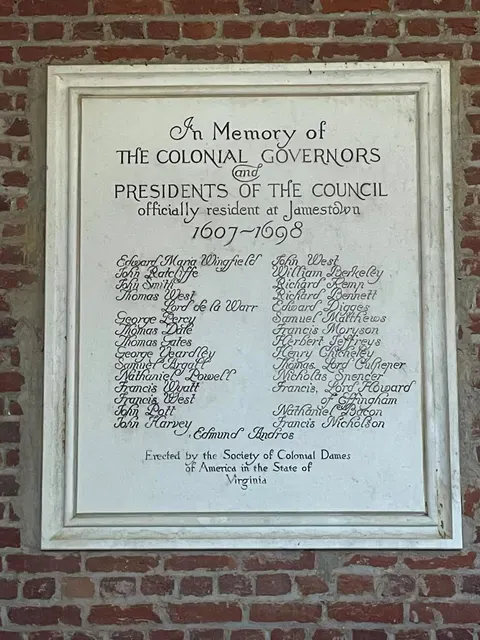
List of Governors and Council, Historic Jamestowne
Context.
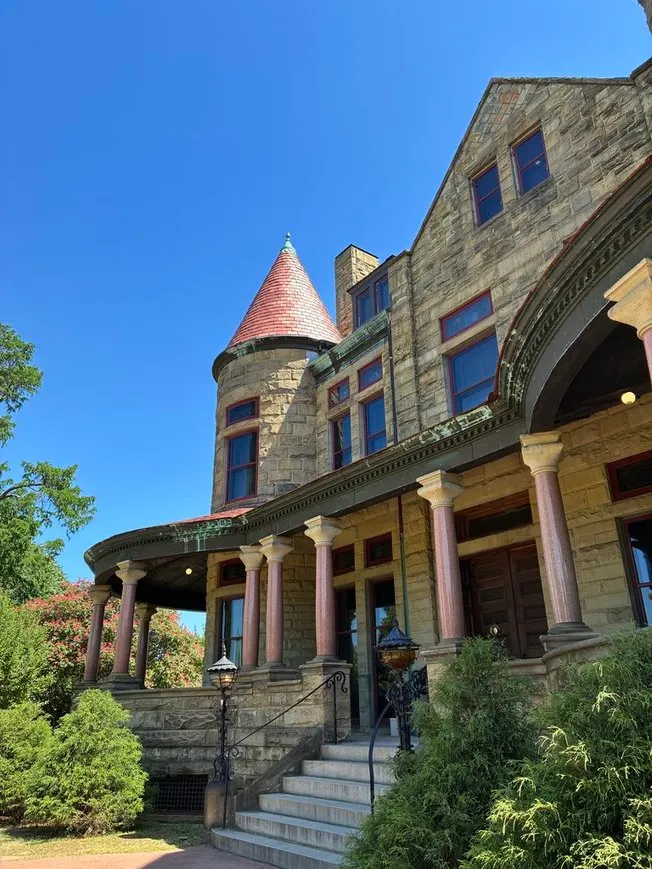
I love visiting Bacon's Castle.
Although it's known as "Bacon's" Castle, Nathaniel Bacon never lived there. In fact, it was occupied by his followers and fighters for a very short time!
This lecture by Dr. James Rice of Tufts University gave me insight into the people and events which led to that occupation. Context. (Which is vital in understanding history, is it not?)
Specifically, this opportunity is available through the efforts of Preservation Virginia's Director of Interpretation and Collections Elyse Werling. Elyse has been leading collaborative efforts on this special lecture series.
RELATED: Meet Elyse Werling in this interview on the blog.
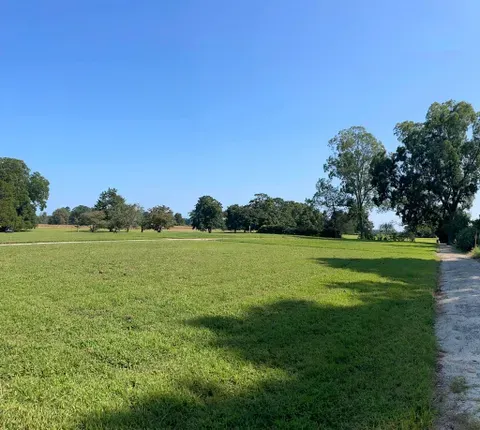
Grounds of Bacon's Castle
Understanding Bacon's Rebellion
The rebellion.
The people and the place.
Knowing who lived in Virginia during that fatal year of 1676 is important to grasping the context of the rebellion itself. Not only names recorded in history books, but the demographics.
- Wealthy landowners.
- Not-wealthy "working class" citizens.
- Dozens of Tribal Nations.
- Indentured servants.
- Enslaved Africans.
Jamestown was where government business took place; at the helm was Governor Sir William Berkeley, answering to King Charles II back home in England. Yes, "home," because Virginia was a colony, and the citizens here were British subjects.
By 1676, the English had been in this region nearly 70 years. Land ownership could be identified as subjective- or not. Relationships between European settlers and local tribes in the form of treaties was common practice.
With multiple Tribal Nations inhabiting the region, there were varied levels of alliance, and sometimes enmity.
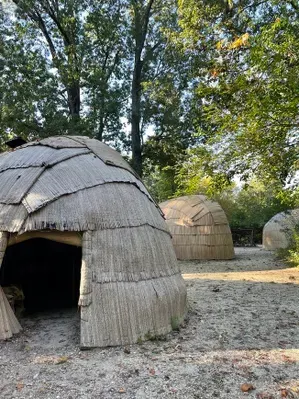
Paspahegh Town, Jamestown Settlement
Nathaniel Bacon's actions.
Nathaniel Bacon, who led a rebellion for the "working class" against British tyranny, was a wealthy landowner. In fact, he served on the Governor's Council!
In 1676, he openly disagreed with Berkeley's handling of response to raids on English property. Berkeley was treading lightly (and rightly in my interpretation) by not alienating allies. His targeted approach of conflict against those who were doing the raids, not all Indians (individuals and tribes as a whole), was not aligned with Bacon's support of a full-on attack.
Bacon's request for a commission allowing him to lead attacks was denied and he built up a militia of "volunteers." And took action.
In May of 1676, Berkeley declared Bacon in rebellion, removed him from the Council, and Bacon's supporters were now fighting against "loyalists" to Governor Berkeley, not just members of local tribes.
In fact, they even burned Jamestown! But Bacon considered himself a loyal British subject, just not one who like his governor. He petitioned Charles II to oust Berkeley.
And where does Bacon's Castle fit in? It sits across the James River from Jamestown in Surry. Arthur Allen, owner of the property, supported Berkeley.
Allen took off for Jamestown and a bunch of Bacon's men moved onto the property and into his home.
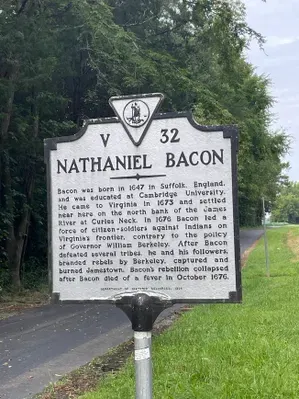
Nathaniel Bacon historical marker
1677.
After months of violence, Nathaniel Bacon succumbed to illness and died in October of 1676.
Also in October, King Charles II signed a proclamation to put down Bacon's Rebellion officially. This bit from Encyclopedia Virginia summarizes it:
"For the Suppressing a Rebellion lately raised within the Plantation of Virginia," King Charles II declares that Nathaniel Bacon and all those associated with him in the uprising known as Bacon's Rebellion, "shall be guilty of the crime of high Treason," and he urges "all his Loyal Subjects … to use their utmost endeavour to Apprehend and bring to Justice the said Nathaniel Bacon
[Click here open the page in a new tab and see a visual of the Proclamation]
He sent men to Virginia to lead troops against Bacon, but they arrived in January of 1677- Bacon had died, Berkeley had taken hold of Jamestown and the situation, and the rebellion ceased.
There were still questions to be answered. Berkeley was sent to England to meet with King Charles II but died July 9th, prior to having the chance to speak with him.
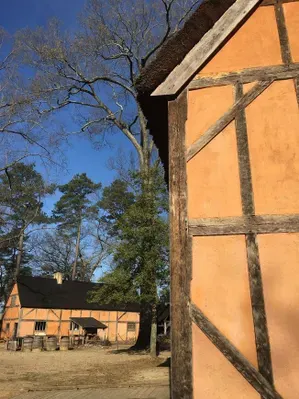
Jamestown Settlement reconstruction
The lecture.
Dr. Rice positions Bacon's Rebellion as a first stab at what we'd view to be "patriotism."
The undercurrent that led to Jamestown, the seat of government, switching hands multiple times between spring of 1676 and January of 1677 was the biggest learning for me during this lecture titled TALES FROM A REVOLUTION: Bacon's Rebellion and the Transformation of Early America.
And now I'm not only reconsidering the basics, but two thought-provoking bits I've learned through the lecture.
- I learned the names of more American Indian tribes from this Eastern Woodlands region. In addition to the familiar-to-me Pamunkey and Paspahegh, I was educated about the Algonquin-speaking Doeg and the Iriquoisan-speaking Susquehannocks.
- I learned Dr. Rice's insight into the value of Bacon's Rebellion as a source of conflict between early Americans and British government; a perspective of "revolution" pre-dating the 18th century.
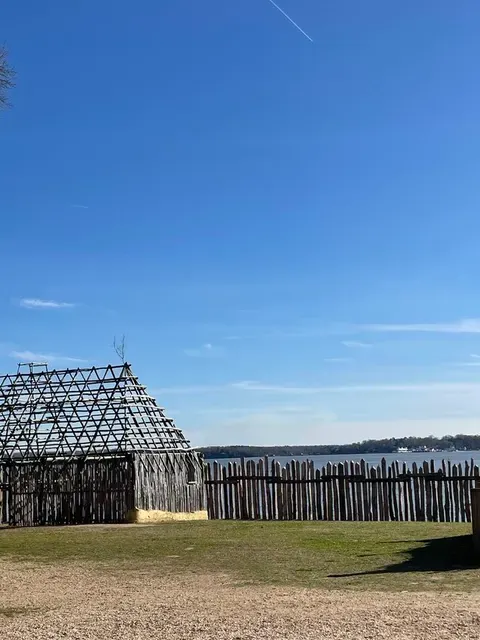
Jamestown Island fort reconstruction
Continuing the journey.
The value of a lecture.
Getting an expert's perspective is always insightful. Especially when that expert is citing primary sources. Naturally, there is a level of speculation and interpretation- that's the art and skill involved.
At the least, doors are opened to a new perspective and at the most, you gain knowledge, understanding, and an opportunity to dig deeper. Possibly even look for primary sources yourself.
Raising our interest to the point of a compulsion to dig deeper and learn more on a subject is what inspires me as a history blogger.
Whether it's the idea that this was truly foreshadowing to our 1776 declaration, the relationship between native tribes and early European settlers, or the specific history of one building: a lecture can be a portal into our shared history.
Visiting Bacon's Castle with new perspective.
As mentioned, I've visited Bacon's Castle multiple times, my next visit will most certainly link the names of the "players" and the context of Bacon's Rebellion more intently. And that's the beauty of visiting an historic site.
Each time you visit, you get more information, a new perspective, or find clues into something you might be presently researching.
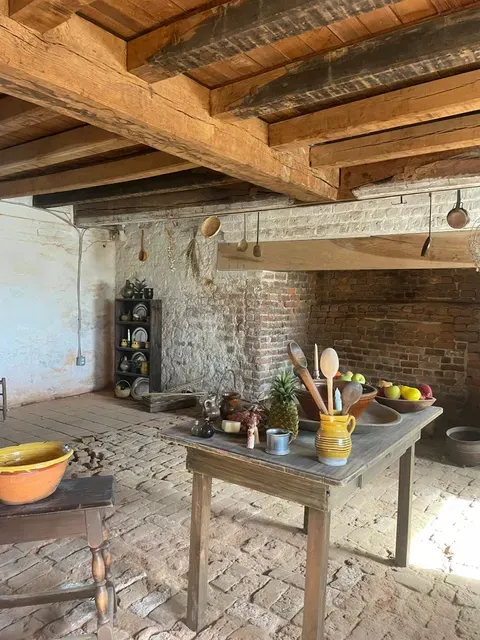
Lower level, Bacon's Castle
Calls to Action.
Attend Preservation Virginia's lecture series in Jamestown and Surry.
This series kicked off with Dr. Rice's lecture, Reconsidering Bacon’s Rebellion at 350 Years, is detailed on a specially created website.
Click here to open the site and learn more about the lectures dedicated to diving deeper in this year commemorating the 350th anniversary of Bacon's Rebellion.
The lectures are scheduled to take place at Bacon's Castle in Surry, or a ferry ride away at either Jamestown Settlement or Historic Jamestowne, where the original fort was built. If you're in the area, I highly recommend it!
Attend lectures elsewhere.
It's my hope you're inspired to seek out lectures to gain foundational knowledge (or a deeper dive) about the historic sites, people, and events that interest you. Here are options to seek out:
- In person.
- Online- live.
- Online- recorded.
Where can you find out about lectures on offer?
- historic sites and organizations: websites typically have an 'events' section or provide an opportunity to drop your email for newsletters and announcements
- social media: you can follow historic sites and organizations to stay updated but also utilize the Facebook Events tab to search out lectures local and online
- Eventbrite: there's an app for it and you can search events in your area or online based on specific interests
- America250.org: you can search by state for local events or filter to virtual (although I live in Virginia, I attended a virtual lecture hosted in Illinois!)
Jamestown Settlement entrance
Dive deeper into Bacon's Rebellion and Bacon's Castle.
Was my summary of Bacon's Rebellion comprehensive? No, absolutely not. I cut down my own words knowing this was a blog post, not a textbook.
If you do want to learn more, I'm offering up options!
Bacon's Rebellion:
- Purchase Dr. Rice's book: Tales from a Revolution: Bacon's Rebellion and the Transformation of Early America (New Narratives in American History) and get deeper context into the lecture I attended.
- Listen to this podcast series from The History of the Americans. I'm two episodes in and finding it a fantastic resource if you're into podcasts!
Historic Bacon's Castle:
- My blog post introducing Bacon's Castle.
- My blog post about the restoration efforts and the work of Preservation Virginia at Bacon's Castle.
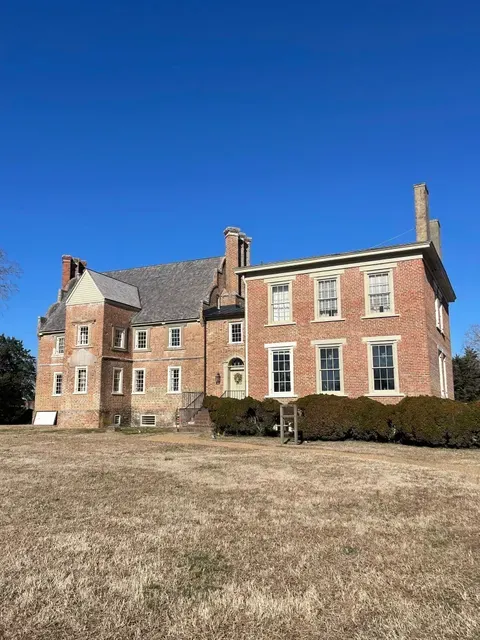
Bacon's Castle, Surry, Virginia
Closing words from history.
You may know some of Bacon's men were executed for their actions. I found this gem of historic documentation written by Sarah Drummond, whose husband William was one of those men.
In the spirit of this blog, and understanding history through the words of those who lived it, I give you an excerpt of Sarah's 1677 letter requesting her property be returned after the dust settled.
Click here to open the full transcription in a new tab. (excuse the strange grammar as always!)
"To the Right Hono:ble the Lords Committie for Trade and Plantations.
The humble Petition of Sarah Drummond wife and Relict of William Drummond late Inhabitant in his Ma:ties Plantacons in Virginia.
Peticion of the Widdow Drummond
Most humbly sheweth
Read 9:th Octobr. 1677
....
... therefore most humbly beseeches your Lord ps , of your wonted compassion towards the distressed, soe to intercede on her behalfe to his Royal Ma tie , as that shee may (with what speed conveniently may be) obtaine his Ma tys most gracious Order That her said Husbands small Estate (in whose hands soever it bee), or the value thereof, may bee entirely restored and confirmed to her and her Children for their future support and maintenance; and particularly her said Plantation with the present crop upon it, and that the security shee hath given (to abide his Ma ty’s pleasure) may bee cancelled.
Are you enjoying this free blog? I love writing and researching it! Use my online tip jar to help keep me going... buy me a coffee:

There is a huge practical disclaimer to the content on this blog, which is my way of sharing my excitement and basically journaling online.
1) I am not a historian nor an expert. I will let you know I’m relaying the information as I understand and interpret it. The employees of Colonial Williamsburg base their presentations, work, and responses on historical documents and mainly primary sources.
2) I will update for accuracy as history is constant learning. If you have a question about accuracy, please ask me! I will get the answer from the best source I can find.
3) Photo credit to me, Daphne Reznik, for all photos in this post, unless otherwise credited! All photos are personal photos taken in public access locations or with specific permission.