From First Shot to Final Episode: How and Why to Watch Ken Burns’ American Revolution
From First Shot to Final Episode: How and Why to Watch Ken Burns’ American Revolution
May 13, 2026
Why I loved Ken Burns' American Revolution.
There, I said it. I recommend dedicating 12+ hours of your life to watching Ken Burns' American Revolution.
This is a short blog post, but not that short. Maybe some of you disagree that it was "good." Or solid. In fact, I've heard (and seen) some pretty venomous accounts of Burns' motives. But... and here's the big BUT... he and his team offer something I value: use of primary sources.
In fact, they cite actual letters and diaries; first-person accounts of people like Philip Vickers Fithian, Joseph Plumb Martin, Phillis Wheatley, and Esther Reed. To name a few.
Without a doubt, an attempt to offer up a wide range of perspectives culturally, on and off the battlefield, and from free to enslaved.
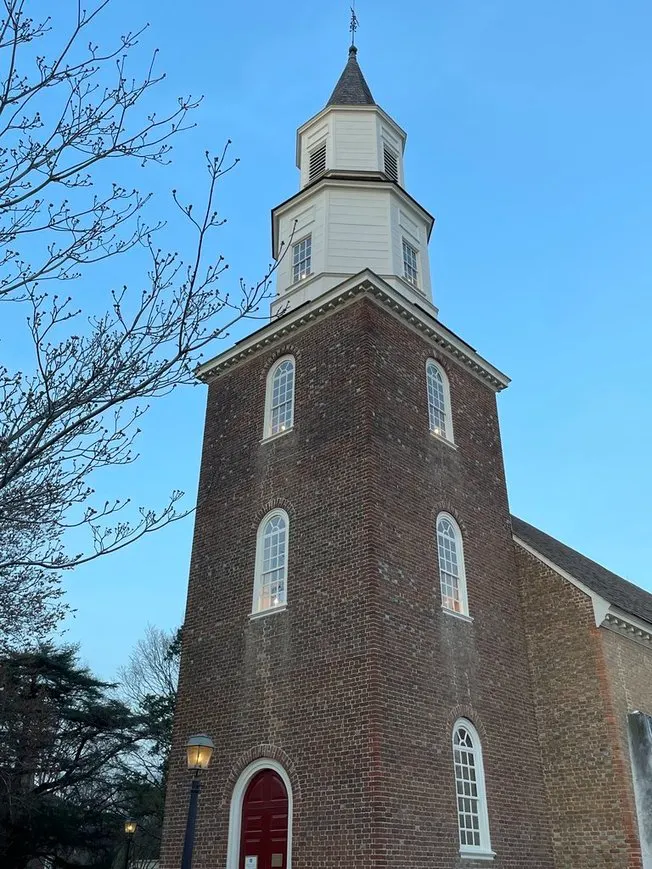
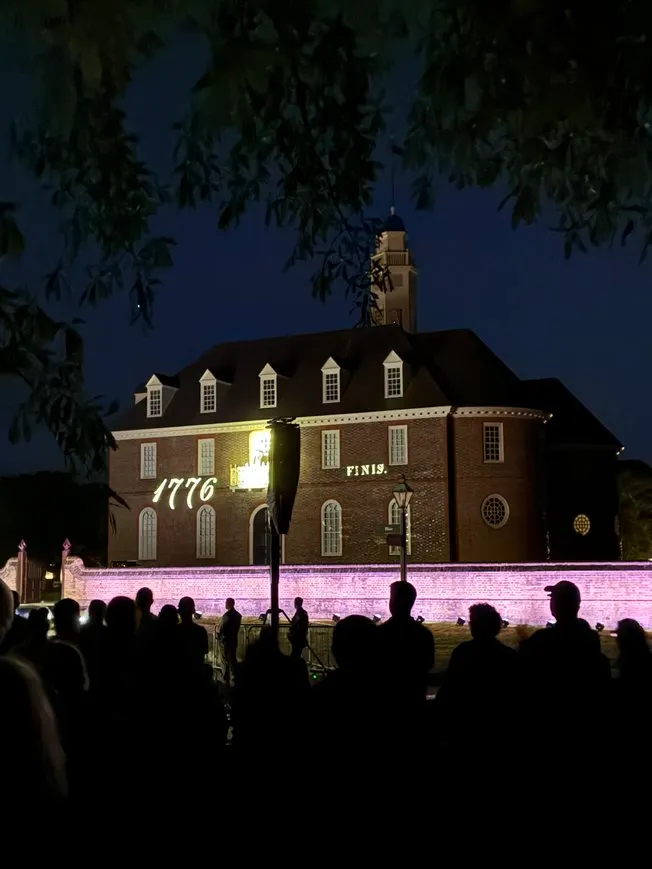
Maps and easy-to-follow graphics of battle strategies allow us to grasp the details of historic events from a factual standpoint. The visuals are carefully created and curated-- including filming done at Colonial Williamsburg (CW). Ok, my passion shows!
But before I lose anyone... since my original run with it, I've had to re-watch bits of the film here and there. For example, I was giving a tour recently and one of the guests brought up a point of contention for him on an 'implication' by Burns.
Ah! And there it is... fact vs. interpretation.
There's overall value of this film compared to others out there. Which is why I am compelled to write this post: how to watch it, as well as why.
Necessary disclaimer: As a blogger, I use affiliate links sometimes! I may receive commission from purchases I share; it does not change your price but sometimes you might get a discount.
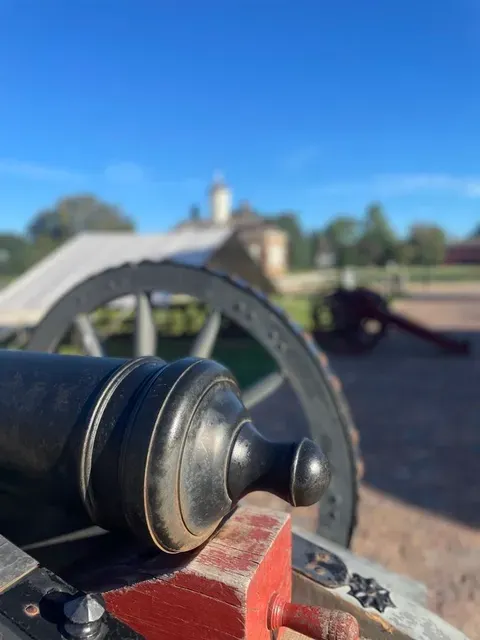
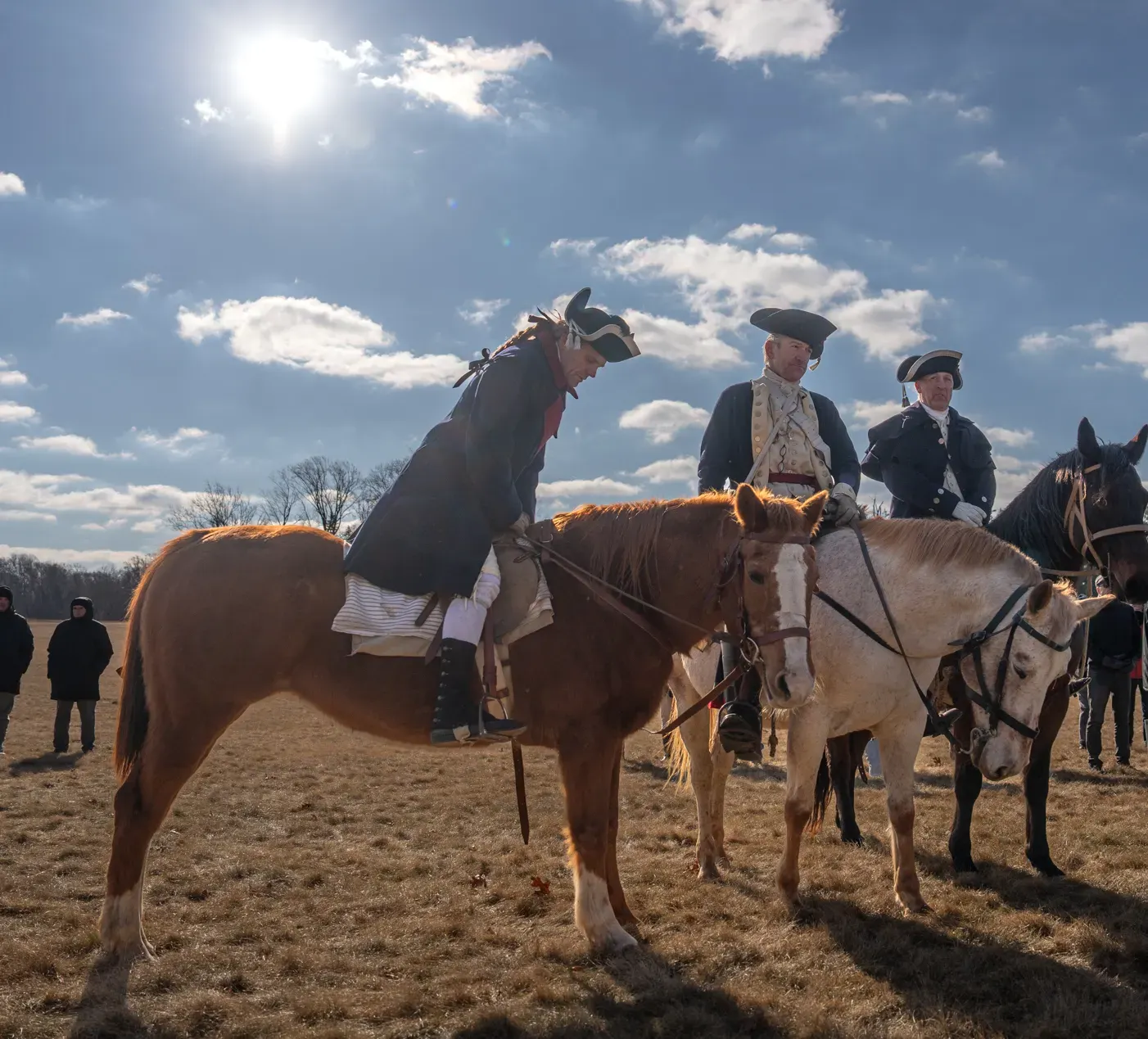
Cannon at CW Military Encampment
Fact vs. Interpretation
Let me explain before those of you who didn't 'agree' with Burns' account of our American Revolutionary War (War) get upset. The focus is on the War for many of the 12 hours.
And: facts are facts. They aren't subjective.
Examples:
- George Washington was Commander-in-Chief of the Continental Army.
- Thomas Jefferson had a first draft of the Declaration of Independence which was amended prior to adoption on July 4, 1776.
- General Rochambeau arrived in Newport Rhode Island on July 11, 1780.
- Benjamin Franklin, John Adams, and John Jay signed the Treaty of Paris in September of 1783 (Click here to view the scan on our National Archives website).
Any of these points raised in Burns' film are inarguable.
Interpretation is the context and analysis of facts. Strictly speaking- per the Cambridge Dictionary online: "an explanation or opinion of what something means."
Yes, this includes filling in some of the blanks. To be honest, sometimes with clear unambiguous logic or sometimes, without it.
As critical thinkers, it's on each of us to know the difference. To know when to dig deeper. If something subjective is "put out there," -- in this documentary or any other -- we must take the extra step[s].
RELATED: Click here for an option to watch the series by opening a new tab.
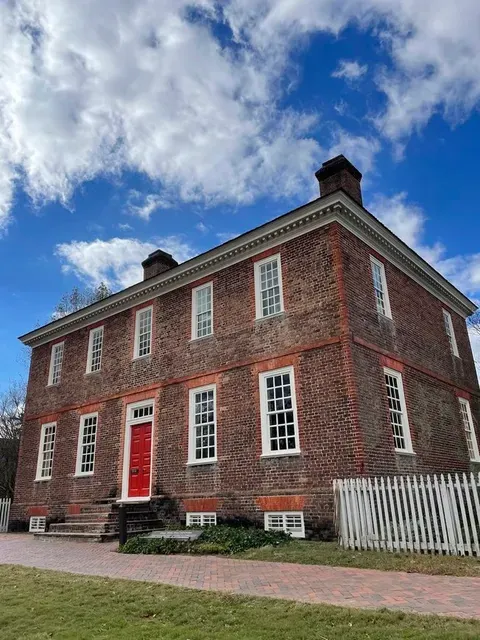
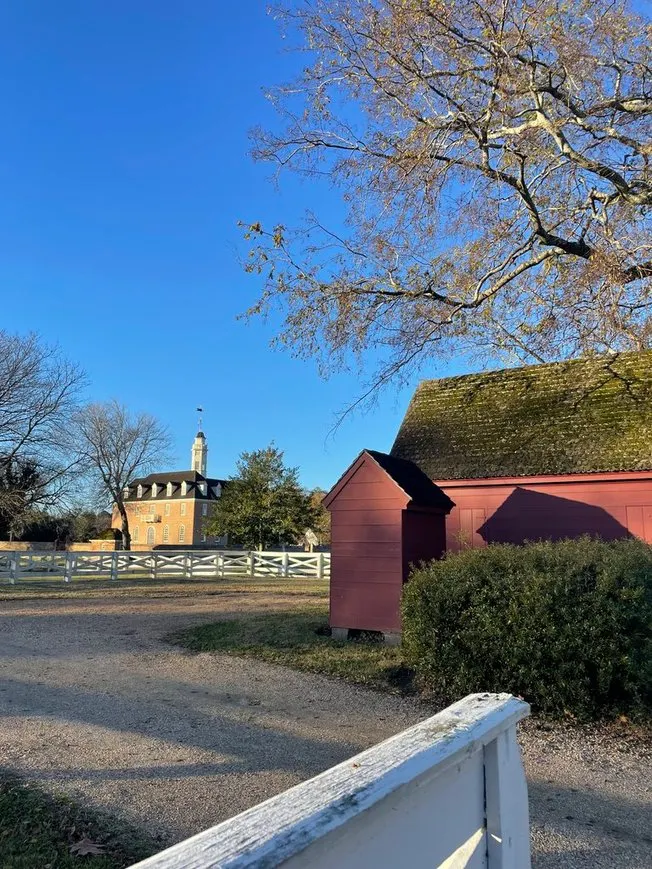
Wythe House, Washington's headquarters for the Yorktown campaign.
Reminder to dig deeper because bias is unavoidable.
Bias truly is unavoidable. In this blog I do all I can to bring you primary sources (I.E. the 'closing words' section and links embedded in my blog posts). But in reality I'm a secondary (or more!) source to you.
- When I share something and explain the context, it's as I understand and interpret it.
- When I impart knowledge I've gleaned from others I trust as historians and/or experts, I'm sharing their interpretations.
Trust and credibility are vital in the study of history. It's why I might question a meme or "story" posted by AI or on a friend's Facebook page.
The source of content is as important as the primary source itself. And sometimes, the interpretation, whether it's of a primary source or multiple 'games of telephone' down-the-line, may be flawed. And yes, I know: calling it flawed may be subjective.
I say all of this to say: dig deeper.
While you may not agree with one's interpretation, including some of what Ken Burns has put out to the world, you have the right and obligation to investigate the context; even to find the primary source itself to read, analyze, and interpret for yourself.
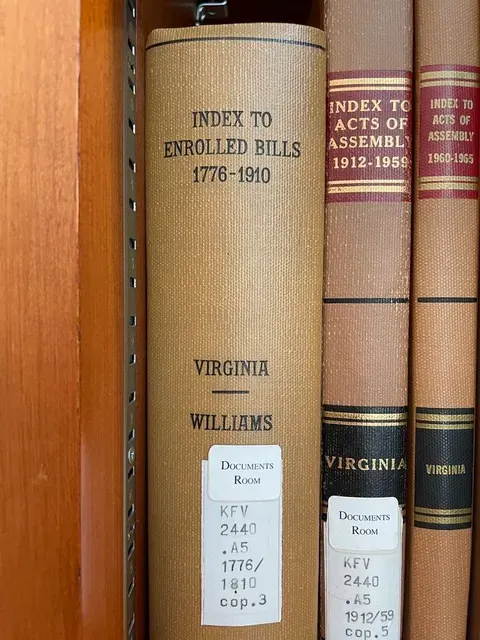
Books at the Library of Virginia.
Resources of the Revolutionary War era I recommend.
4 Books.
1- Journal and Letters of Philip Vickers Fithian.
Why I love it:
For starters, it's a primary source (transcribed). Fithian was a tutor from New Jersey who was employed by Robert Carter III. Carter was one of the wealthiest landowners in Virginia, active in the political scene on the eve of our Revolutionary War.
This book offers up conversations, observations, and insight into all aspects of life on the brink of American Independence.
Why I trust it:
As stated above: it's Fithian's own words. A first-hand account transcribed; the editor shares the details.
2- Thomas Jefferson's Garden Book.
Why I love it:
On the surface it's a book about his experimental efforts in gardening. However, it includes letter excerpts, notes, and citations that offer insight into the entire period.
Jefferson tracks it all. Knowing Jefferson bought mourning gloves while his draft of the Declaration was being torn apart (not literally) before Congress- these are the things I love.
Why I trust it:
The endless citations. The words of Jefferson. And the credibility of Edwin Morris Betts, who compiled it.
Why I love it:
The book is sectioned off into each founder for easy reference- that's a plus! But the value in this book is the fact you can pull together a portrait of each man through the words, descriptions, and impressions of his contemporaries-- male and female.
Why I trust it:
The author is a reknowned historian focused on primary source documents. Read more about John Kaminski here.
4- Letters on the American Revolution. 1774-1776
Why I love it:
Letters. My favorite primary source! And these are from "everyday" people. Not just the famous founders, generals, and names we've become familiar with. This book offers up opportunities for even more perspectives from first-hand experiences.
From the front lines.
Why I trust it:
Editor Margaret Wheeler Willard cites where she sourced these letters- from specific London newspapers to working with staff of multiple historical societies. (And citations can be investigated, of course!)
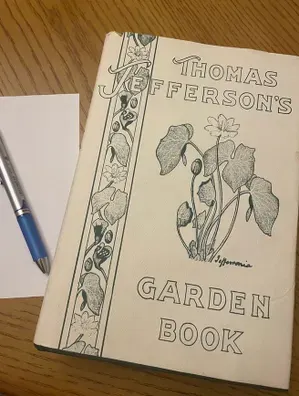
My copy of Jefferson's Garden Book.
Keep going: 5 options.
1- Read book reviews on the blog.
Check out what I've already shared by clicking here. Subscribe using the form on this page and stay updated for new entries!
2- Explore stories of American Independence on the road.
Have you downloaded the ExploreHere app yet? Do it by clicking here.
Using it, you can find Historical Markers, Interpretive Signs, and War Memorials for these categories:
- Colonial Era
- Patriots and Patriotism
- War, US Revolutionary
Each entry has coordinates that you can drop directly into your GPS apps!
3- Visit Virginia.
Let me help organize your time here! Click here to discuss and book:
- a customized walking tour in CW included with a curated travel itinerary for you trip to the region- whether you're here for 1 hour, 1 day, 1 week...I'll sort it
4- Read the Founders' words.
The National Archives has a special place for this: Founders' Archives. You can search by name, period, or even type in a topic! Click here.
5- Listen to a podcast- circling back to Ken Burns' American Revolution.
This Ben Franklin's World episode in which podcaster Liz Covart interviews co-directors Sarah Botstein and David Schmidt.
Listening to this podcast truly demonstrates both "how" (in what context it was created) and "why" (the value of the primary sources used) to watch Ken Burns' American Revolution.
Closing words from history.
From the Founders' Archives, a letter excerpt from John Adams to his wife Abigail. A first-hand account into 1777 Philadelphia and the disease plaguing it. One account, which can be cross-referenced with others of course! Giving men like Ken Burns' and history-lovers like us, a view into the past.
Read the letter, with citations, in full here.
John Adams to Abigail Adams, 13 April 1777
John Adams to Abigail Adams
April 13. 1777
I have spent an Hour, this Morning, in the Congregation of the dead. I took a Walk into the Potters Field, a burying Ground between the new stone Prison, and the Hospital, and I never in my whole Life was affected with so much Melancholly.1 The Graves of the soldiers, who have been buryed, in this Ground, from the Hospital and bettering House, during the Course of the last Summer, Fall, and Winter, dead of the small Pox, and Camp Diseases, are enough to make the Heart of stone to melt away.
The Sexton told me, that upwards of two Thousand soldiers had been buried there, and by the Appearance, of the Graves, and Trenches, it is most probable to me, he speaks within Bounds.
To what Causes this Plague is to be attributed I dont know. It seems to me, that the Want of Tents, Cloaths, soap, Vegetables, Vinegar, Vaults &c. cannot account for it all.
Are you enjoying this free blog? Keep me caffeinated, researching, and writing! Use my online tip jar to buy me a coffee:

There is a huge practical disclaimer to the content on this blog, which is my way of sharing my excitement and basically journaling online.
1) I am not a historian nor an expert. I will let you know I’m relaying the information as I understand and interpret it. The employees of Colonial Williamsburg base their presentations, work, and responses on historical documents and mainly primary sources.
2) I will update for accuracy as history is constant learning. If you have a question about accuracy, please ask me! I will get the answer from the best source I can find.
3) Photo credit to me, Daphne Reznik, for all photos in this post, unless otherwise credited! All photos are personal photos taken in public access locations or with specific permission.