The Dooleys’ Maymont — 100 Years Open, a Gilded Age Dream Kept Alive
The Dooleys’ Maymont — 100 Years Open, a Gilded Age Dream Kept Alive
May 07, 2026
100 years of gifting history to visitors.
The property.
In a year of observing the 250th anniversary of American Independence, Maymont of Richmond, Virginia is commemorating it's 100th. And what is that centennial celebration? A century of sharing a piece of America's Gilded Age, rich with history, with the public.
Yes, in 1926, Maymont, former home to the Dooleys, opened its doors to the public. Sitting on 100 acres which include manicured gardens, a wildlife trail, a carriage house and parkland as far as the eye can see, what was once a "suburban" escape for James Dooley, is now an oasis within the city.
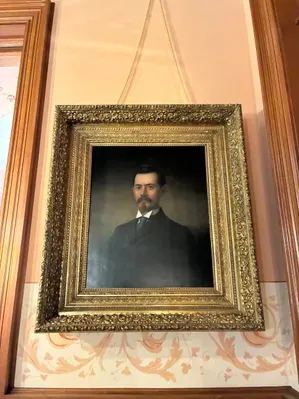
James Dooley portrait.
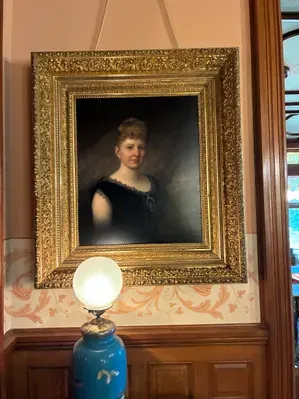
Sallie May Dooley portrait.
Maymont's name comes from Mrs. Dooley's (Sallie's) maiden name of May, combined with the French word "Mont" for our English "hill." Early on, the name was written as "May Mont" - two distinct words.
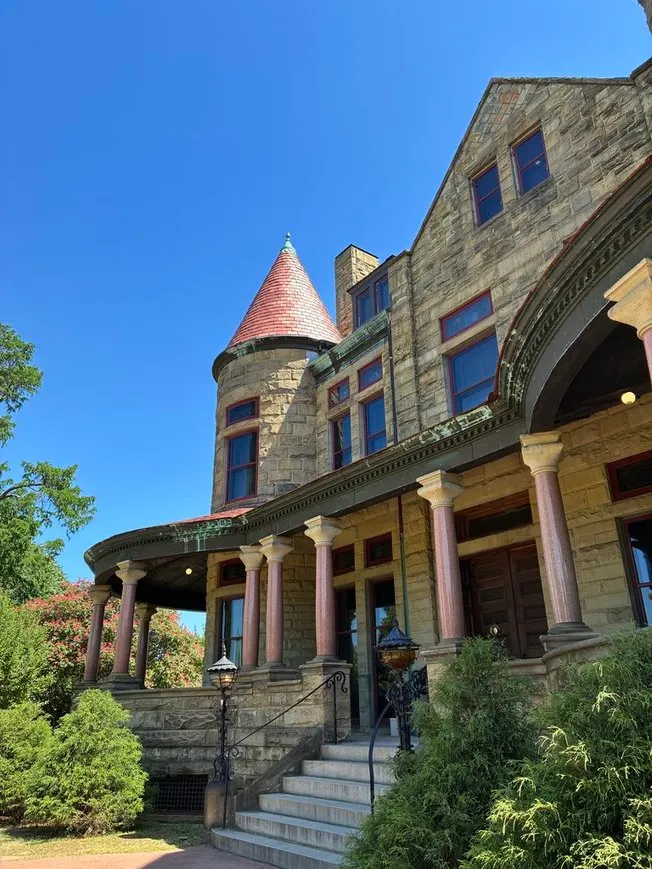
The house was completed in 1893 and is architecturally apparent to being of the era. It's a blend of Romanesque Revival and Queen Anne- popular during the Gilded Age.
When you reach the closing words section of this post, you'll find an emotional perspective shedding light on the Dooleys' determination to build their home here.
Disclaimer: As a blogger, I use affiliate links sometimes! I may receive commission from purchases I share; it does not change your price but sometimes you might get a discount.
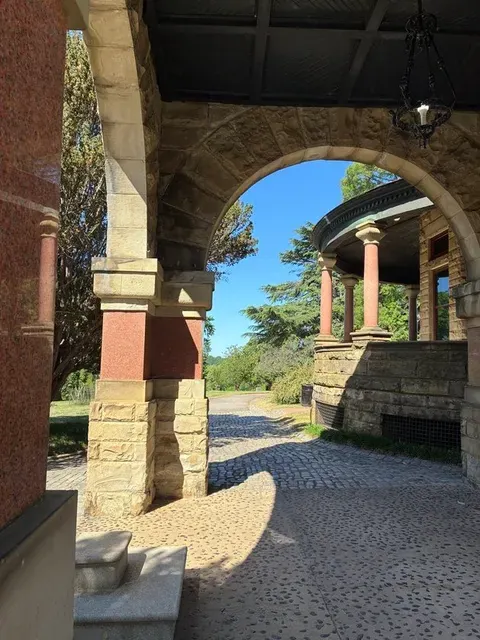
Maymont Mansion entrance.
The Dooleys.
Two shout-outs are necessary:
- Melissa Abernathy, Communications Manager and
- Kathy Garrett-Cox, Chief Curator and Director of Historical Resources and Collections (Curator)
They properly introduced me to Maymont. But also to James and Sallie May Dooley, who were in their 40s when they began life at Maymont.
It was the Gilded Age. Past the Richmond of The Civil War, Virginians were meeting the great industrial period head-on. James was Richmond-born and committed to growing the region's wealth during this distinct period in American history. His personal success was built as a financier.
From the iconic swan bed in Sallie's bedchamber to the crystal and gilded objects adorning the French-styled drawing room, whispers of the Gilded Age and of the personalities of the Dooleys speak to visitors.
Don't you worry, I'll have more on the blog focused on the art and objects of Maymont!
Ah the Gilded Age and the Dooleys. They owned a town-house in the city, this suburban oasis, and one more stop beyond easy reach of Richmond.
Like many of the Dooleys' contemporaries, they also owned a "summer home." Sitting on hundreds of acres on Afton Mountain well west of Richmond, is a stunning white marble home. Knowing about it, the swan bed now at Maymont makes sense.
Click here to learn more about Swannanoa, now privately owned. And yes-- I hope to get there myself.
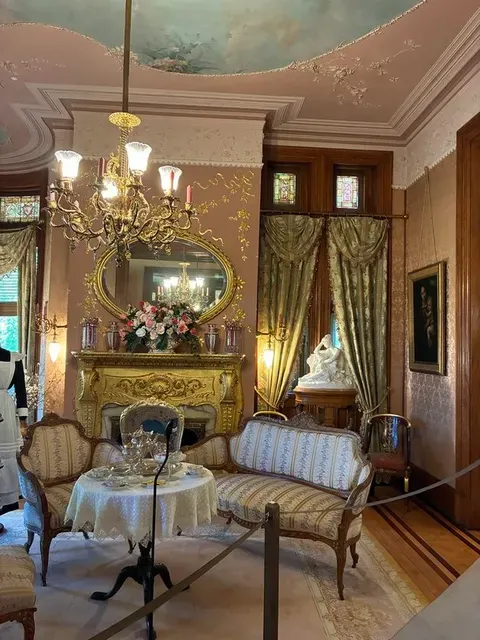
French-style drawing room.
Preserving Maymont.
Prep, planning, and payoff.
Before re-opening in this 100th year of public access, a 2-year process took place.
Working with a fine arts packing firm, Kathy and the Maymont team made sure the whole house was packed up. The effort included careful organization of each and every bit of history inside.
Beyond the paperwork, new research from paint analysis to re-imagining the living space-- and planning for new technology-- was critical.
Kathy, a Curator with experience in Newport, Rhode Island (a mecca for Gilded Age homes!), was galvanized by the opportunity to re-stage rooms and maximize the visitor experience.
All in a structure that was never modified beyond what it was: a home of the Gilded Age.
The payoff: an historic site you must visit.
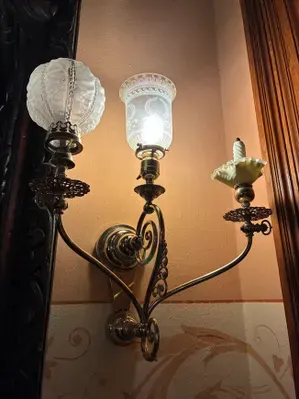
Gas and electric lighting combo.
Restoration.
Funding.
The "Maymont 2025 Project" was launched with an $8 million grant and $4 million in additional support. You can get full detail by clicking here to open a separate tab.
The roof.
A new red roof revitalizes what's known to accurately depict the Dooley's original design. One clue pointed out by Melissa while we walked the grounds: the roof on the original gazebo yards away from the main house.
And also: the updated roof is a stunningly perfect complement to the red James River granite columns. And yes, the James runs through the City of Richmond.
All the red, which shows a lighter pink hue or deeper speckled red, depending on the sunlight and your position, is a brilliant contrast to the Ohio sandstone Mr. Dooley had transported to Virginia.
How else are we certain about the red roof? One clue is in Thomas Wilkinson's 1903 watercolors; a series commissioned by the Dooleys. The art can be found throughout Maymont.
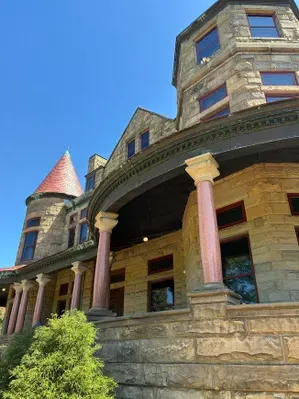
Maymont exterior, 2026.
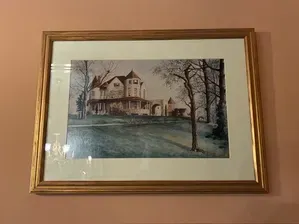
Wilkinson watercolor at Maymont
James' bedchamber.
Redefining a space is important when ensuring the story of a place, and the people who inhabited it, is interpreted.
Based on the design of the home, and the placement of windows overlooking the grounds, Kathy's defined location for James' bedchamber is vital to the visitor experience.
This space is an example of Kathy's meticulous efforts on making the guest experience both immersive and accurate. In fact, upstairs as a whole is updated because of new research.
And by the way, the bed is James' actual bed. Many of the pieces at Maymont were owned by the Dooleys and like the bed, are home.
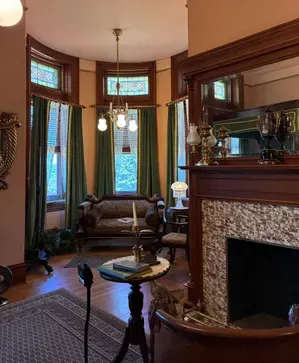
Windows in James' bedchamber.
Sallie's private space.
My final highlight: the swan room (my term) which was Mrs. Dooley's bedchamber. It has new paint based on new technology performed by renowned analyst, Dr. Susan Buck. It's a different blue than past visitors will have witnessed on the walls.
Through the analysis done by Ms. Buck, visitors now get the true vibe of the room, a blue that leans slightly into green dependent on the light and angles of the room.
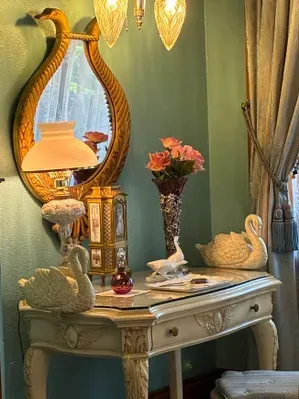
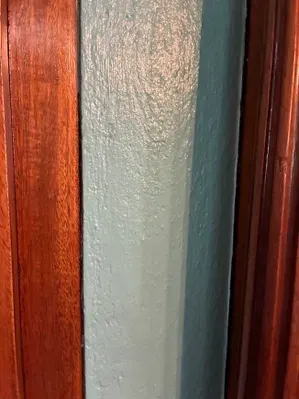
The walls of the "swan room."
Preservation.
Fire protection is key. And my visit to Maymont wasn't the first time this topic has come up-- remember my post about Bacon's Castle?
At Maymont, new smoke detectors were installed; a state-of-the-art system. With an impeccable nod to discretion and aesthetics, visitors will only notice them if these new detectors are specifically pointed out.
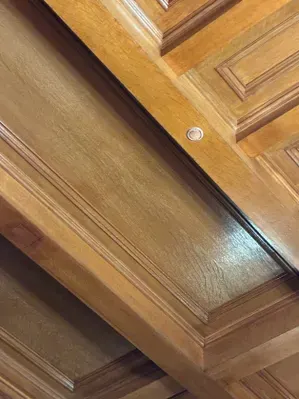
Smoke detector in ceiling.
Another highlight of the preservation efforts: fiber-optic lighting added in the dining room. If you've been to Maymont in the past, you may not have noted the paintings or the table settings in exceptional detail.
Now you will!
The new lighting not only shines light (literally) on every detail of the room, but is safety feature in preserving the historic pieces.
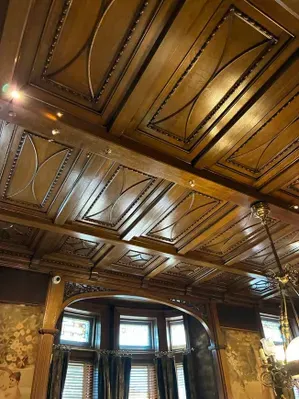
Fiber optic lighting in the dining room.
Elevating the visitor experience.
Technology.
From tablets to new lighting mentioned above, the visitor experience has been elevated for Maymont's 100th anniversary -- and years to come!
As visitors, we can select topics and objects we want to learn more about- and at our own pace.

Example of tablets to elevate the visitor experience.
Daily life on display.
The lives of James and Sallie aren't the only ones visible at Maymont.
Mrs. Dooley's niece Florence Elder arrived at Maymont to assist the Dooleys with household management sometime between 1918 and 1920. The guest suite upstairs, where she would've stayed, includes period pieces from the Ginter collection.
Lewis Ginter was a friend and peer of James, also living in Richmond; he is the namesake to the famous botanical garden.
Using period pieces is critical when those owned by the Dooleys are not available.
Below-stairs life is also on display. Furniture for resting, objects used by the staff, and outstanding educational resources. You can gain knowledge of how all the people who spent their days at Maymont did so. Because we all know the value of understanding the lives of every person who stepped through history.
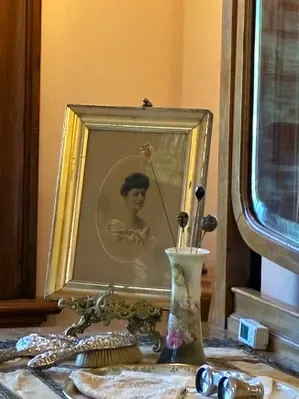
Florence Elder.
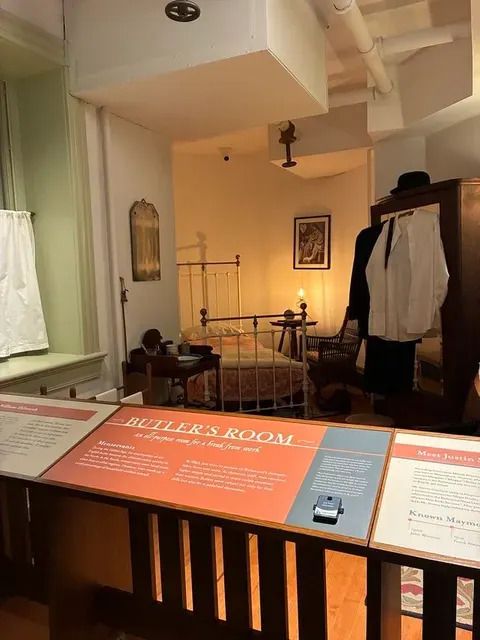
Butler's Room, below stairs at Maymont.
Maymont 100 years later.
The legacy.
One thing that stuck with me as I walked the halls, climbed the steps, and now think back on my time with Kathy and Melissa is something these two stewards of Maymont explained:
James and Sally May Dooley conceived their home to be a decorative arts museum, not one of themselves.
The unintended by-product gives us a peek into daily life in "suburban" Virginia at the turn of the 20th century and insight into a couple who took care with their legacy.
Insight beyond that of the Tiffany window on the landing and the stunning art now visible in the dining room due to the upgraded lighting.
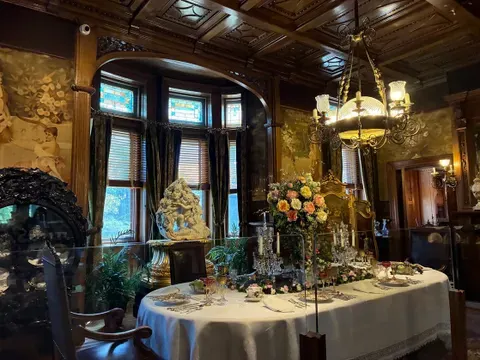
Dining room under new lighting.
A Maymont to-do list for you.
Saluting 100 years.
Click here to open Maymont's page dedicated to the centennial!
The page includes details about their speaker series, special events, and a timeline of the site (from becoming a museum to each fantastic addition and restoration!).
In 2026 and beyond.
Visit! Again and again.
- Tour the Dooley's house.
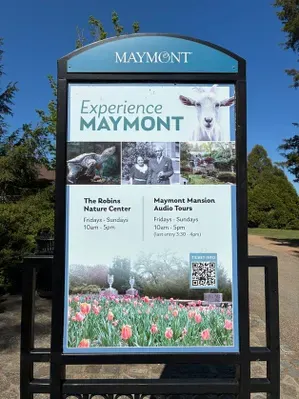
- Wander the wildlife trail, the farm, and the Robins Nature Center.
- Immerse yourself in all the gardens-- especially the Japanese and Italian Gardens (just sayin'!).
- Attend one or more of the seasonal and holiday events (take a peek by visiting my friend Lauren Z. Ray's video including her fall visit to Maymont's Garden Glow!)
When asked about her favorite garden, Kathy said this:
"I would say it depends on the day and time of year! I don't think I could choose because they are both lovely. I like the Italian garden maybe slightly more as it is always blooming and I like the architecture to the garden that provides different views and experiences as you walk down the terraced steps."
So visit both. And all the smaller gardens and plantings throughout the property.
Click here for details on visiting Maymont.
Click here if you'll be in the area and want to discuss my putting together a curated itinerary for your trip- to include Maymont!
Support Maymont's future by securing it.
If you have the ability and would like to be a part of the Maymont legacy, click here to:
- become a member
- make a donation
- volunteer
- learn all the ways to become a part of Maymont's future
Maymont is almost fully funded through community and visitor commitment!
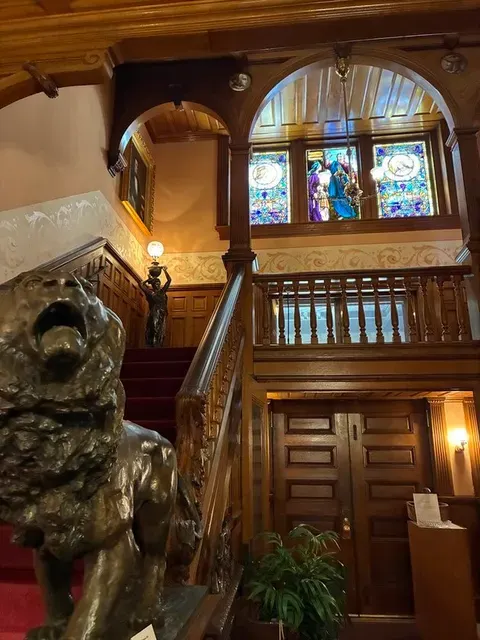
Maymont entryway, Tiffany window on landing.
Closing words from history.
Maymont, and Kathy in her role, have access to rare and primary source documents. Kathy shared this one with me. It explains in simple terms, the decision behind the name Maymont and the floor plan of the home.
From 1906 annexation testimony by James H. Dooley:
Twenty years ago, when Mrs. Dooley and I were younger than we are now, and more active, we used to ride horseback every afternoon, and in the course of our rides we discovered this piece of property that had been unknown to me or her....where we were greatly struck with the beauty of the views of the River and the beautiful oaks that were on the slope of that hill. Mrs. Dooley fell in love with the place, and begged me to buy it and give it to her for a home.
Are you enjoying this free blog? I love writing and researching it! Use my online tip jar to help keep me going... buy me a coffee:

There is a huge practical disclaimer to the content on this blog, which is my way of sharing my excitement and basically journaling online.
1) I am not a historian nor an expert. I will let you know I’m relaying the information as I understand and interpret it. The employees of Colonial Williamsburg base their presentations, work, and responses on historical documents and mainly primary sources.
2) I will update for accuracy as history is constant learning. If you have a question about accuracy, please ask me! I will get the answer from the best source I can find.
3) Photo credit to me, Daphne Reznik, for all photos in this post, unless otherwise credited! All photos are personal photos taken in public access locations or with specific permission.