When Research Wanders: Baron de Kalb, John Locke, and the Joy of Detours
When Research Wanders: Baron de Kalb, John Locke, and the Joy of Detours
Aug 04, 2026
3 distinct topics: none of which are Baron de Kalb.
Some blog posts take longer than others to write.
This blog post turned out to be a quick one to write, a detour born from my Major General Baron de Kalb research.
I've always got a few blog posts in process and on deck. And a massive list of topics, miscellaneous notes, etcetera. My growing interest in sharing a few more names lost and/or lesser known in American history discussions (popular culture for sure!), pushed Major General Johann von Robais, Baron de Kalb, to the forefront.
Yes, a blog post introducing this martyr to the American cause, born in what's now Germany and killed in 1780, is on the way. When it's complete, I'll update this post with the link!
Disclaimer: As a blogger, I use affiliate links sometimes! I may receive commission from purchases I share; it does not change your price but sometimes you might get a discount.
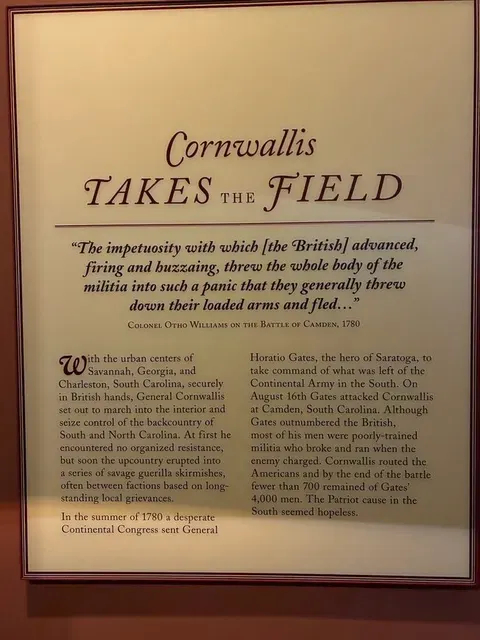
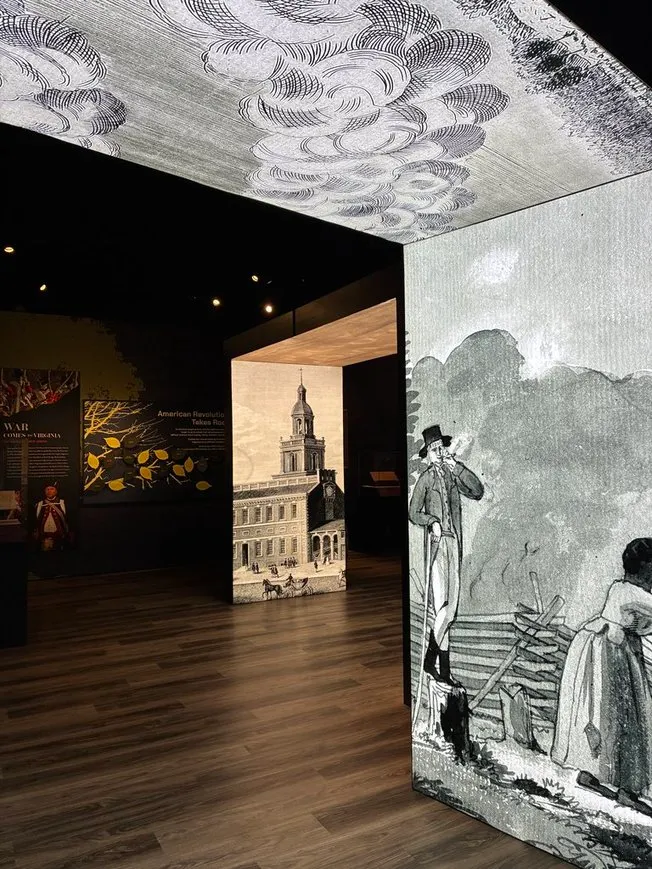
Notes on Camden, American Revolution Museum at Yorktown
Wandering to Yorktown for inspiration and research.
Yesterday, I went on a search for more information, and photos, related to the Major General's time with the Continental Army. No surprise, I went to Yorktown- the site of the decisive victory in the war for independence.
And one de Kalb died 14 months too early to experience when he was killed at Camden, South Carolina.
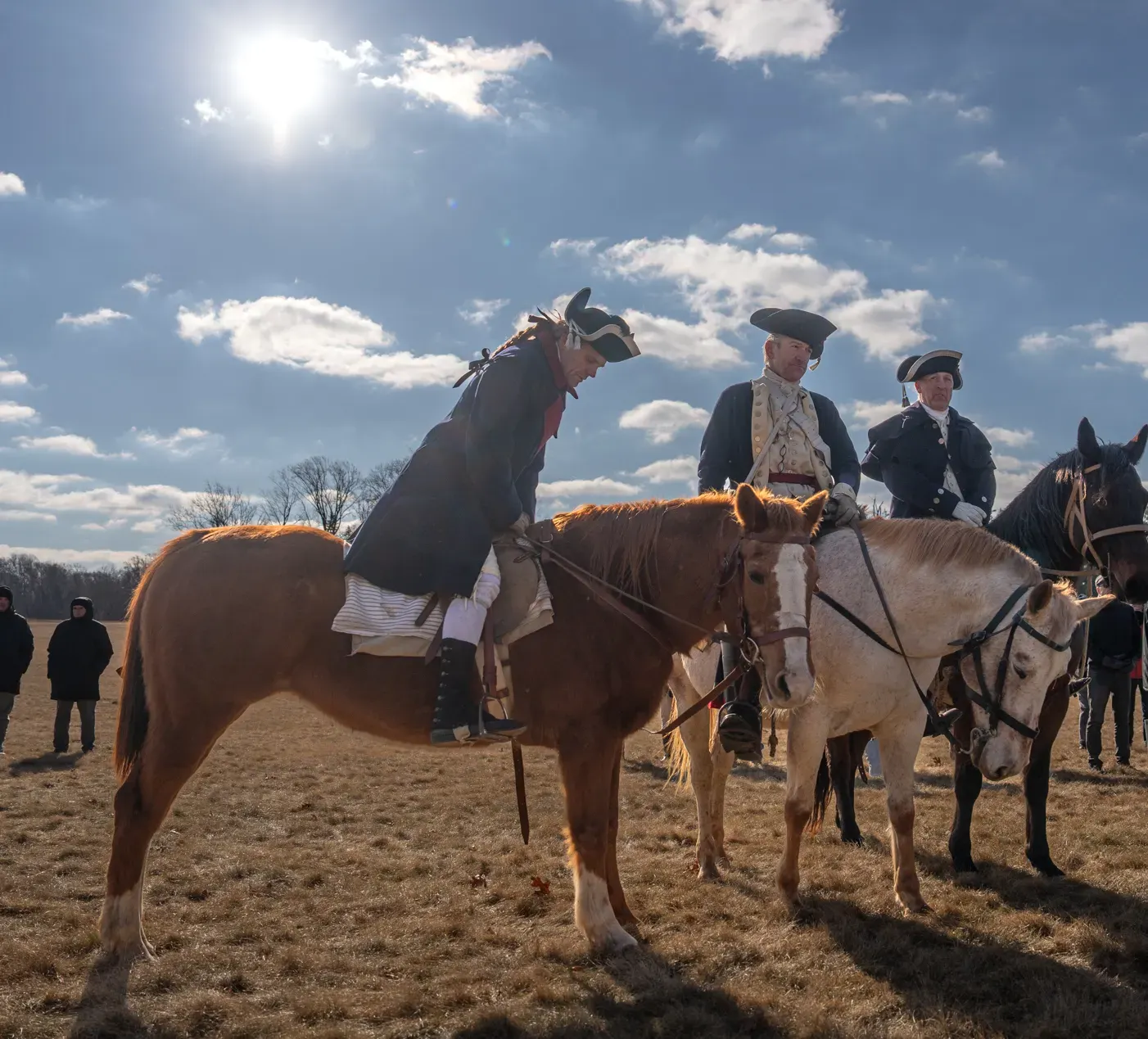
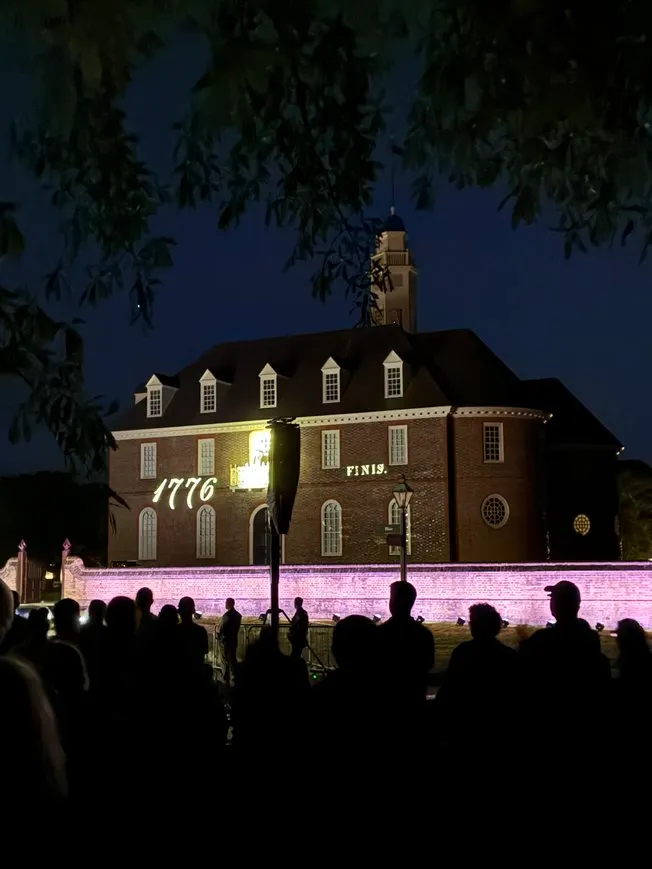
After watching my friend Mark Schneider on stage as the Marquis de Lafayette in Colonial Williamsburg (CW), I felt the urge to wander. He is the one that introduced me to de Kalb.
My compulsion to wander was not in the stacks of a library but in a museum-- I wanted to see what the American Revolution Museum at Yorktown has exhibited in relation to the Camden battle of 1780.
So... my journey from Williamsburg to Yorktown included:
- visiting the American Revolution Museum at Yorktown (as mentioned and also the site of the Give Me Liberty special exhibit, which will also be featured on this blog!)
- grabbing coffee and lunch in front of my laptop at Mobjack Bay Roasters across from the Custom House (another blog post on the way!) and
- driving home on the historic Colonial Parkway- stopping at an historical marker that wasn't what I expected
Detour 1: John Locke's portrait.
At my first stop, the American Revolution Museum in Yorktown, a portrait caught my eye. It was of John Locke, so I stopped to really look at it.
I hear John Locke's name a lot as a regular in CW's historic area, especially from their Thomas Jefferson, Kurt Smith. It's how I've learned, undoubtedly, Locke's words are inspiration for the opening lines of our famous Declaration of Independence as well as other 'revolutionary' documents.
In his 1690 Second Treatise on Government, Locke begins Section 95 with: "MEN being, as has been said, by nature, all free, equal, and independent."
Sound familiar? Surely, men educated on philosophers of the Enlightenment read Locke. I know this because Locke's concept appears and reappears throughout the 18th century, especially this bit surfacing during the 1770s.
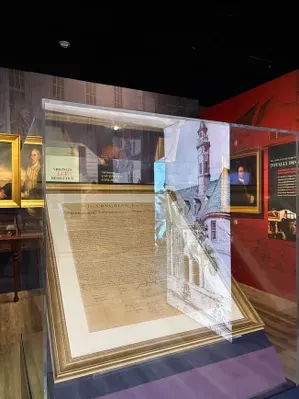
Declaration print, American Revolution Museum at Yorktown
While Thomas Jefferson was in Philadelphia drafting the Declaration in the early summer of 1776, George Mason was hundreds of miles away in Virginia working on a Declaration of Rights, now transcribed on the National Archives' website.
Section one of Mason's work as primary author begins:
"That all men are by nature equally free and independent and have certain inherent rights, of which, when they enter into a state of society, they cannot, by any compact, deprive or divest their posterity; namely, the enjoyment of life and liberty, with the means of acquiring and possessing property, and pursuing and obtaining happiness and safety."
The common thread: the words of Locke.
RELATED: Click here to be directed to my source for Locke's Treatise, Hanover College, by opening a new tab. You'll be able to read more of it, which discusses this concept as well as how freedom (and liberties) are impacted by government.
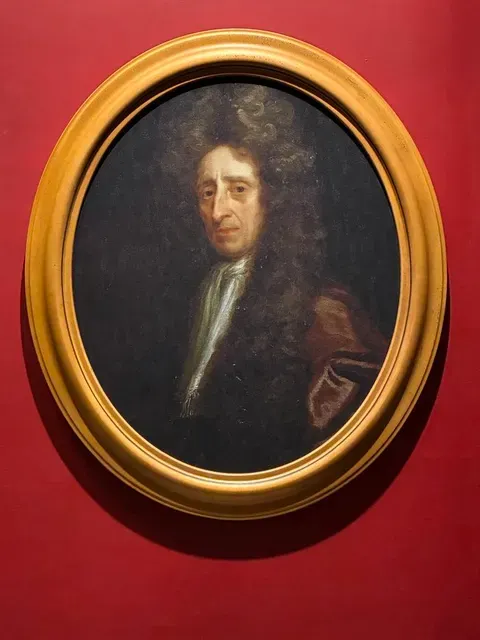
Locke portrait, American Revolution Museum at Yorktown
Detour 2: The Cole Digges House.
Visiting Mobjack Coffee Roasters and Petite Cafe (Mobjack) for black coffee and a kids' grilled cheese with tomato and house pesto (recommended by staff) meant being inside an 18th century gem.
Mobjack go-to stop for me in Yorktown. This historic site sits on Main Street, facing the famous still-standing Custom House. Custom House is cared for by the Cmte. De Grasse Chapter, Daughters of the American Revolution (DAR) and seeing these two buildings, in the heart of a National Park dedicated to early America -- is super cool.
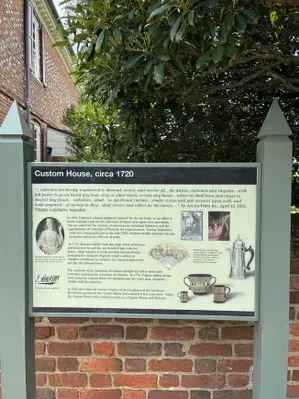
Custom House marker
Long before Mobjack settled into the Cole Digges House as a business, people lived there.
Being situated in Yorktown makes the structure historically significant in itself, and Cole Digges was well-known in 18th century Yorktown.
- Digges served on the Royal Governor's Council, appointed in 1720
- born in 1691, Digges hailed from a wealthy tobacco family and died fairly young in 1744
- the house's historical marker onsite, lists it as being built circa 1730, but references construction in 1720
- Cole's son Dudley, a lawyer, built a home nearby and served in multiple government roles as well
Read more about Yorktown and the Digges family in this article on the National Park Service's website.
In closing of 'detour 2,' if you get a curated itinerary from me to include Yorktown, I'll be adding Mobjack to it. Hint, hint: click here to book a call and discuss said itinerary.
Side note: I was given a tour of Custom House by a passionate leader within the Cmte. De Grasse Chapter of the DAR and yes, as mentioned above, a blog post is coming!
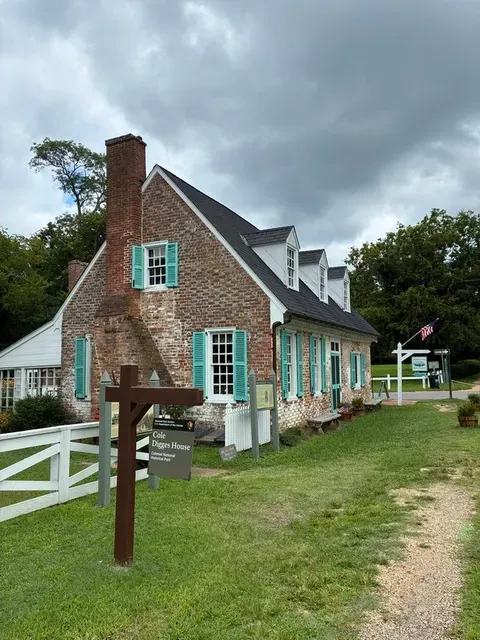
Cole Diggs House, August, 2026
Detour 3: Nathaniel Bacon's marker- the other Nathaniel.
The Colonial Parkway, connecting Yorktown with Jamestown and Williamsburg, has been closed for repairs- for a long time. I truly missed driving along the York River on the section leading me to Yorktown.
On my drive home, I pulled over for an historical marker with Nathaniel Bacon's name on it (and to get a view of the water!).
2026 marks 250 years of American Independence, but also, 350 years since Bacon's Rebellion. I've been learning about this rebellion-- and even wrote this blog post about a Preservation Virginia lecture I attended. I've also been pretty focused on the historic site inspiring so much discussion about Bacon's Rebellion: Bacon's Castle.
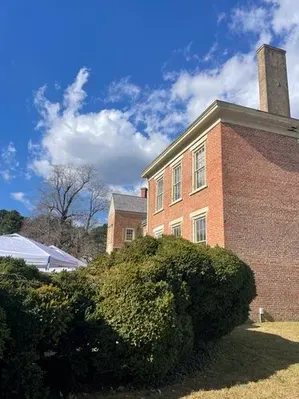
Side view, Bacon's Castle
Taking a moment to read a marker dedicated to Nathaniel Bacon felt like a solid decision. But it wasn't what I thought. The Nathaniel I'd been learning about was Nathaniel Bacon, Jr. As often happens in studying the 17th and 18th centuries, Jr. was related to Nathaniel Bacon on the marker, but wasn't his son.
"Jr." denoted a younger male sharing a name, but the relationship between namesakes could run any number of directions. In this case, the marker shared the details of the rebellious Bacon's cousin, who goes down in history as Nathaniel Bacon the Elder for distinction of the two.
By his death in 1692, the "elder" Bacon representing York County, had been an active member of the House of Burgesses and Governor's Council. On multiple occasions, he even served as President of the Colony and acting Governor according to Encyclopedia Virginia's website.
So this detour led me to another person who lived in Virginia during a pivotal time.
RELATED: If you are into historical markers, click here to use my code and download the ExploreHere app I use!
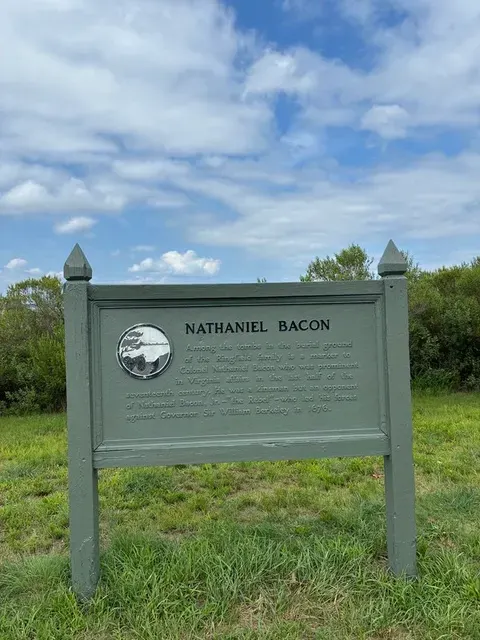
Nathaniel Bacon historical marker
The reminders.
My on-a-whim trip to Yorktown was an awesome reminder. Leaving your 'usual' surroundings, and wandering off in search of information and context for one topic can send you down rabbit holes -- in a good way.
These detours were also a reminder of how cool it is to be on my own personal deadlines, not those of that corporate life I ditched a few years back. #noregrets.
Closing words from history.
An excerpt of a letter from John Adams to his grandson George Washington Adams.
The topic: the works he should be reading and the impact of men who came prior to our nation's founders; those who were studied, referenced, and ultimately had an impact on the country being built.
From John Adams to George Washington Adams, 6 January 1822
Montezillo. 6th. January. 1822.
Dear George,
A cold frosty snowy morning. I have received your No 11.
I am glad you have got through the spirit of laws.
(letter continues)
...and I will propose a problem for your future solution in the course of your life—viz Whether mankind is most indebted to Francis Bacon, John Locke or Dugald Stuart. Which of the three has most promoted the cause of real science—which most diffusively spread illumination and civilization in the world. I will pass over the first and the last, and fix on Locke.
----
Click here to read the full letter on Founders Archives.
Are you enjoying this free blog? Keep me researching and writing! Use my online tip jar and buy me a coffee:

There is a huge practical disclaimer to the content on this blog, which is my way of sharing my excitement and basically journaling online.
1) I am not a historian nor an expert. I will let you know I’m relaying the information as I understand and interpret it. The employees of Colonial Williamsburg base their presentations, work, and responses on historical documents and mainly primary sources.
2) I will update for accuracy as history is constant learning. If you have a question about accuracy, please ask me! I will get the answer from the best source I can find.
3) Photo credit to me, Daphne Reznik, for all photos in this post, unless otherwise credited! All photos are personal photos taken in public access locations or with specific permission.