June 1776: Reflections on the 250th Anniversary of the Declaration's Composition
June 1776: Reflections on the 250th Anniversary of the Declaration's Composition
Jun 15, 2026
The Lee Resolution of June, 1776.
On June 7, 1776, a Virginian led the way to American Independence. Richard Henry Lee followed the instructions sent up to Philadelphia from his fellow Virginians in Williamsburg.
Weeks earlier, Virginia voted not only to support a resolution for Independence should it be introduced, but to set the wheels in motion by introducing the resolution.
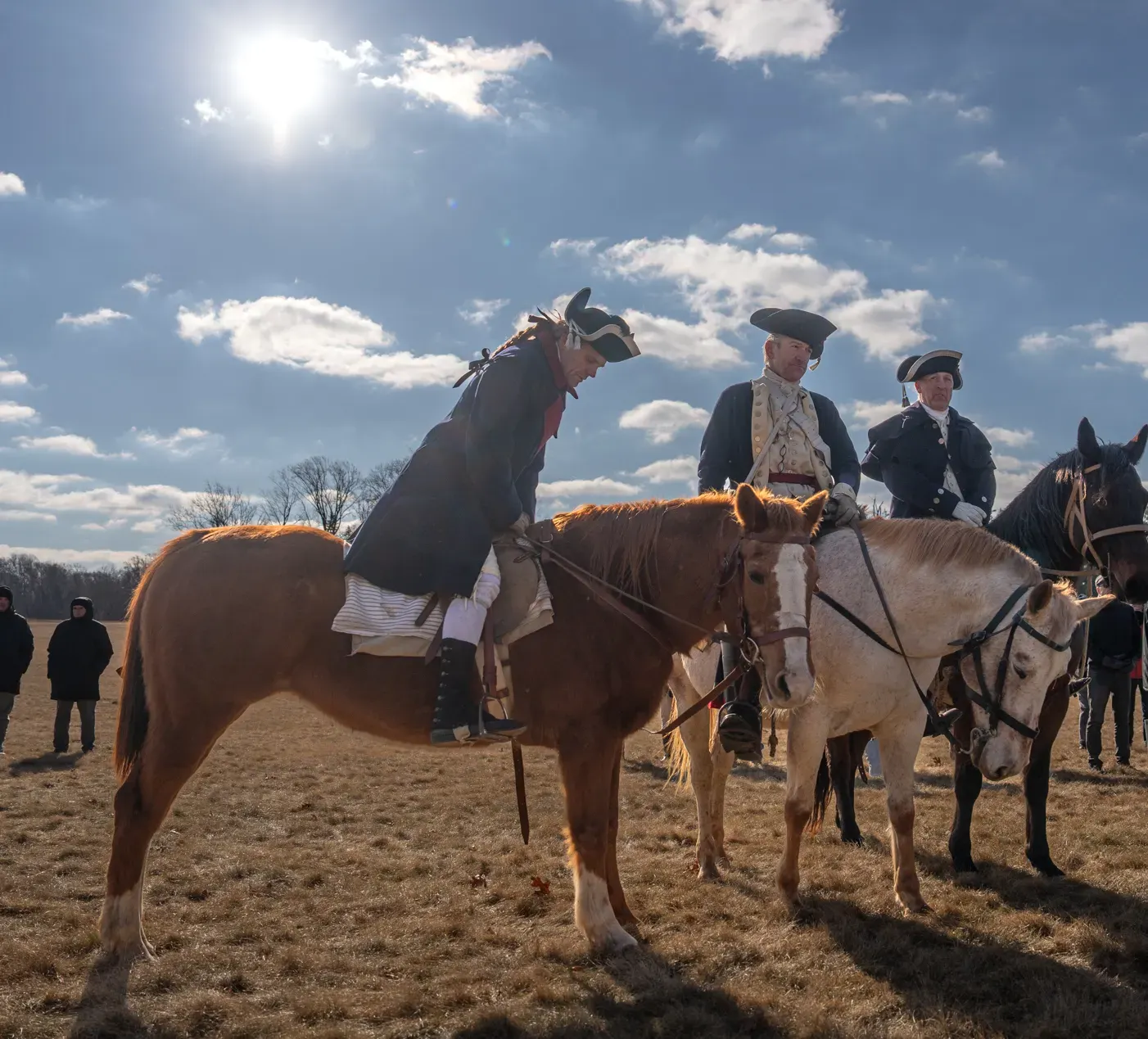
After the vote, Thomas Nelson, Jr. made his way on horseback to Philadelphia. You can read the complete resolution (and see scans of it!) on Encyclopedia Virginia's website, where I pulled this excerpt:
"Resolved unanimously that the delegates appointed to represent this colony in General Congress be instructed to propose to that respectable body to declare the United Colonies free and independent states absolved from all allegiance to or dependence upon the crown or parliament of Great Britain..."
The flame was lit. Virginia had spoken- eloquently, passionately, and firmly.
And on June 7, 1776, Richard Henry Lee, Virginia delegate to Congress, made the move.
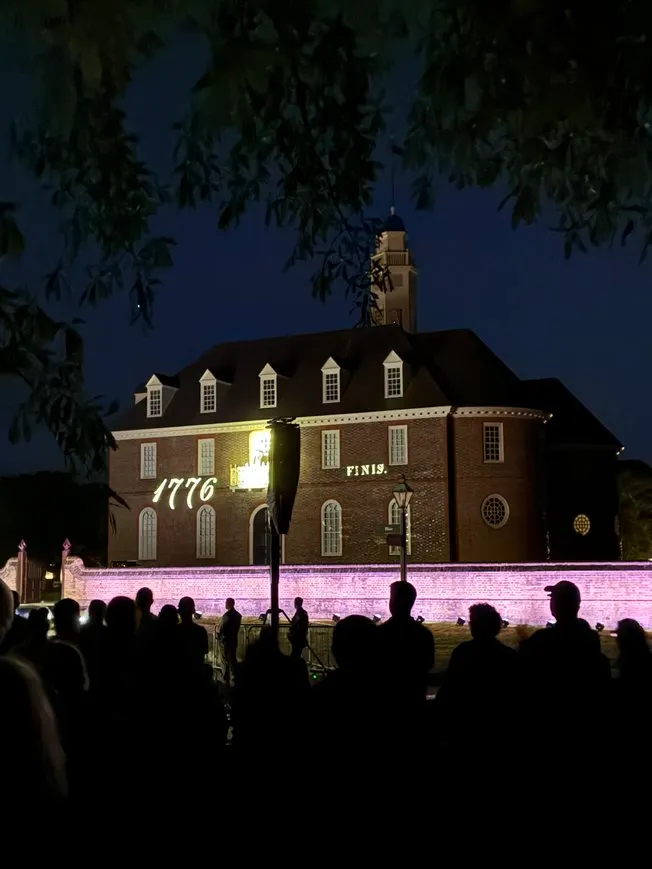
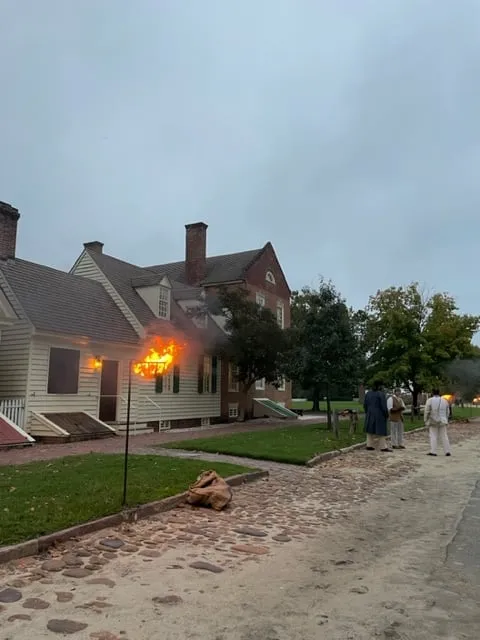
RELATED: Click here to read about Colonial Williamsburg's epic Flame of Revolution performance commemorating the May 15th vote.
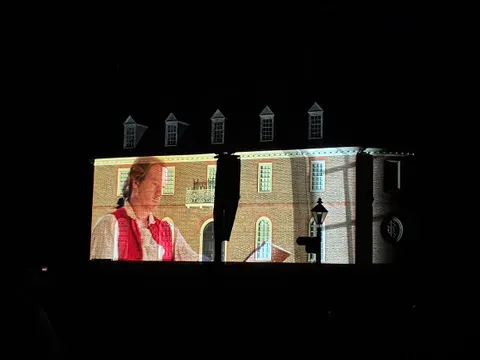
Jefferson portrayed by Kurt Smith, Flame of Revolution
Disclaimer: As a blogger, I use affiliate links sometimes! I may receive commission from purchases I share; it does not change your price but sometimes you might get a discount.
The Committee of Five.
The task.
Naturally, Lee's Resolution for American Independence wasn't voted on immediately. As Congress discussed the impact and consequence of such a vote, five men were given the task of composing our message to the world.
In the weeks leading up to the July 2nd adoption of Lee's Resolution, Thomas Jefferson created his first draft of our Declaration of Independence.
John Adams, Benjamin Franklin, Roger Sherman and Robert Livingston would review, discuss, and slightly modify the "thing" before presenting it to the Committee of the Whole. The 'Whole' being men from across the colonies, gathered in Philadelphia for the Second Continental Congress.
Thomas Jefferson was chosen to create the first draft. Multiple reasons were remembered by John Adams including openly admitting he's not well-liked, Franklin not wanting his words subjected to the scrutiny of a committee, and a big one: Jefferson was a Virginian. (Adams' recollection embedded in this letter)
The largest and often-described as the most English of the British Colonies, Virginia being at the head of such a Declaration makes sense the more I learn about our shared American history.
Not to mention, in 1774, Clementina Rind of Williamsburg published the "Summary View of the Rights of British America" in her Virginia Gazette. With Jefferson credited as the author; making him a renowned penman. (copies of the pamphlet can be purchased at CW's Prentis Store when you visit!)
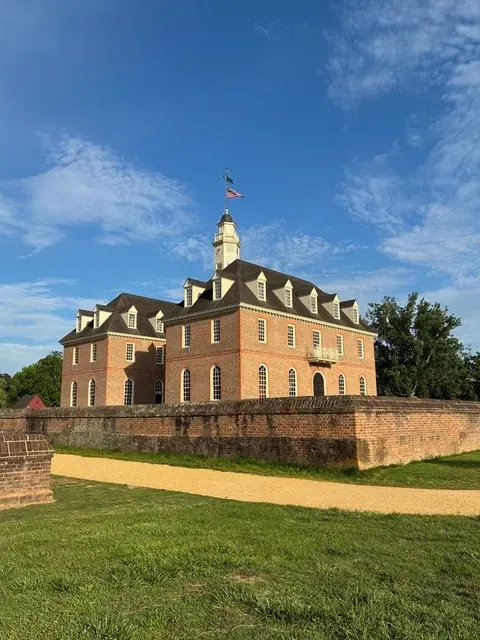
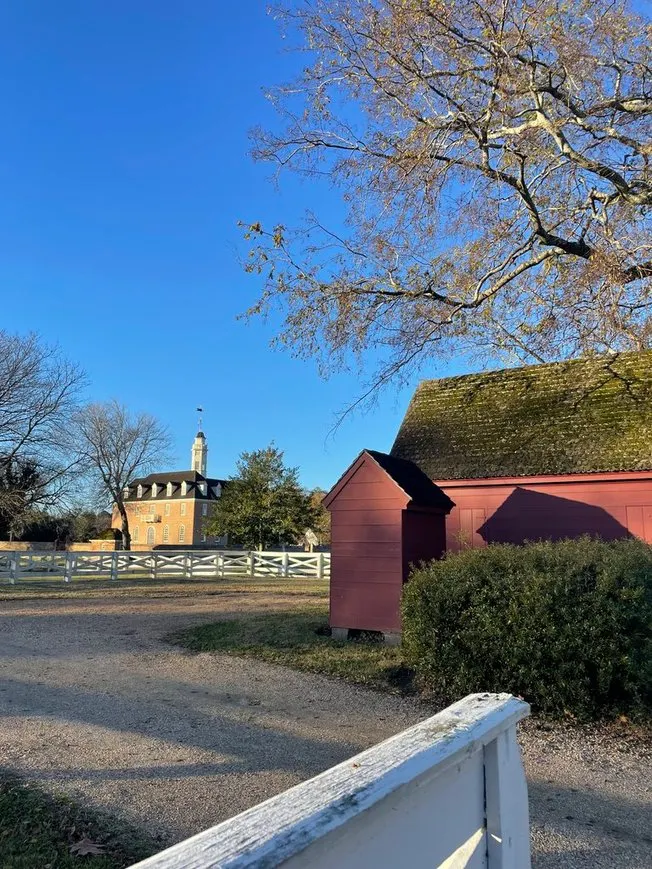
Colonial Williamsburg's Capitol Building reconstruction
The men.
In the spirit of this blog, I'm keeping it short. Every human is complicated and dropping a few lines on each of these five is barely the tip of the proverbial iceberg. I invite you to dive deeper - as for Jefferson, there are nearly 50,000 letters to and from him (the best primary source ever!) transcribed on Founders' Archives.
I'll drop a link or two for each committee member should you want to go down any rabbit holes!
Thomas Jefferson.
Aged 33 in June of 1776, he'd lost his mother and a newborn child that spring. His wife was home in Virginia after the pain of losing a child and he was in Philadelphia, breaking up with the mother country he'd known all his life. He was cousin to Peyton Randolph, the Virginia leader and past Continental Congress President who passed away in fall of 1775, unable to see the formation of a United States of America.
- Dive deeper into Thomas Jefferson with this blog post (which also includes a little timeline and links to my favorite Jefferson resources).
- Click here to read about CW's Pursuing Happiness program- one which will be running often throughout 2026.
- To get a sense of Jefferson's actions in 1776, get his Garden Book edited by Betts- there are notes throughout the book, as well as letters and citations that are helpful!
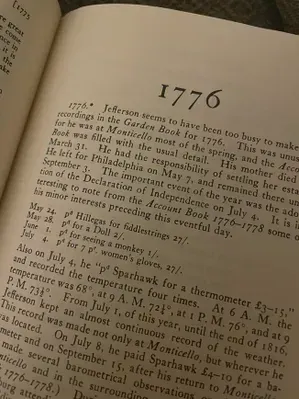
1776, my copy of Jefferson's Garden Book.
John Adams.
The man from Massachusetts who famously corresponded with his wife Abigail, the future-second 'first lady' of our new nation.
Adams was a lawyer; in fact, he was one of three representing British soldiers (shocking I know!) in the famous case surrounding the events of what's to be remembered as the "Boston Massacre" - yet his support of the Patriot Cause is evident throughout the Revolutionary era.
- Click here to read a post I wrote about Abigail Adams, including excerpts of letters and offering an opportunity to learn more about the couple.
- As for the letters, if you want to have them in your collection, grab the book here.
- Last, click here to open the Adams Papers, a digital archive on the Massachusetts Historical Society's website! A serious TREASURE TROVE. Personally, I have it bookmarked.
Benjamin Franklin.
In his early years, Franklin was young man who was all over the place in finding his footing, settling on printer, but becoming a great philosopher, writer, inventor, diplomat... the list goes on.
In 1776, Franklin was an elder member of Congress. Wise and well-respected, it makes sense he was included on the committee -- at least to me as one diving deeper into this era.
Born in January of 1706, Franklin traveled extensively and understood not only his fellow Americans throughout multiple colonies, but those over the ocean in mother England.
I'm giving my highest recommendation to reading Franklin's own words in an effort to understand the man himself.
- His autobiography, which I have downloaded on Kindle for easy reference and occasional bits of insight. Click here to purchase his book, originally published in 1793.
- Transcriptions on Founders' Archives. Click here to open in a new tab.
- For some insight blogger-style, my blog post published in honor of his 320th birthday! Click here.
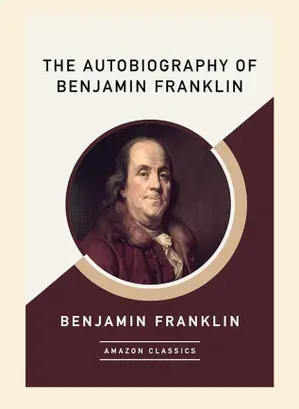
My copy of Franklin's book.
Roger Sherman.
Roger Sherman is a name I admit I wasn't familiar with prior to living in Williamsburg. I'll give credit to past educators as likely discussing him in terms of our Declaration of Independence being composed; maybe it's my own memory that fails and kept the first three mentioned front-of-mind.
So who was Roger Sherman?
A New England man for one. Born in Massachusetts, he was representing his home colony of Connecticut prior to Independence in 1776. In addition to serving on the Committee of Five, he was on the Committee of 13, responsible for creating the Articles of Confederation. And yes, he also was a signer of our Constitution!
From shoemaker to lawyer to politician, Sherman was described in John Adams' diary, in the following except from Adams' 1774 time in New Haven, Connecticut. (source page on Founders' Archives)
"This Morning Roger Sherman Esqr., one of the Delegates for Connecticutt, came to see us at the Tavern, Isaac Bears’s. He is between 50 and 60—a solid sensible Man."
A man who in Adams' assessment, agreed with his views.
Learn more about Roger Sherman:
- Click here to open his biographical sketch on the American Battlefield Trust's website.
- Click here for Sherman's papers, compiled into a book available for purchase.
Robert Livingston.
Livingston is another man whose name didn't roll of my tongue prior to diving into life here, with CW on my doorstep. In fact, I've heard mention from guests asking about him during Q&A portions of performances, sharing they're descendants of Robert Livingston.
Born in and representing New York, Robert Livingston wasn't yet 30 when he served on the Committee of Five. Not surprisingly, he was educated in the law as were many members of Congress; he even practiced with another famous New Yorker, John Jay.
Serving as "recorder" for New York's government, he was removed from the position after showing opposition to the King and support for the cause. He'd signed the First Continental Congress' Articles of Association. Blatant support indeed.
- Click here for an online biographical sketch of Livingston published by CW.
- Click here for a deeper dive into Livingston, his judicial career and goals to publish his papers - all on the Gotham Center for New York History's website.
RELATED: Click here to open Monticello's podcast episode, less than 9 minutes in length, about the "Committee of Five" in a new tab.
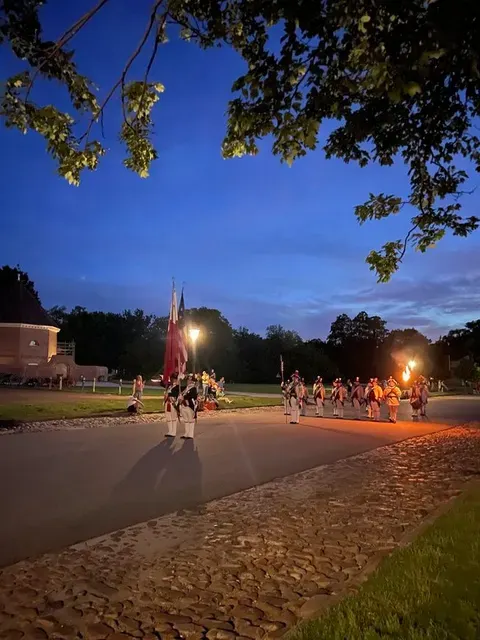
CW Fifes and Drums, evening performance for the public
Celebrating American independence.
Making declarations.
The opening words of the Declaration of Independence were similar to sentiments being adopted throughout America.
In fact, George Mason, primary author of the Virginia Declaration of Rights opened the document with almost identical words; words bringing the teachings of John Locke and perspective of natural rights forward. That Declaration, adopted on June 12, 1776, was the model for almost every other state.
These men of the 18th century were talking to each other. They were studying the same philosophers, drinking from the same punch bowl so to speak.
July 4, 1776's vote isn't an isolated event.
The May 15th Virginia vote, Lee's introduction of his resolution on June 7th and it's July 2nd adoption, as well as the adoption of Virginia's Declaration of Rights...all were steps forward on our road to becoming our United States of America.
Thomas Jefferson wasn't flying solo on the mission. And- he was a human. A man likely experiencing grief while walking treacherous ground in putting quill to paper in the late weeks of June, 1776.
Four men walked with Jefferson on that dangerous road in Philadelphia. Bravely putting forward a document they stood together for and handing it off to Congress for debate.
- They supported his draft that including the anti-slavery clause removed to ensure a unanimous vote.
- They worked together, men from different cultures and backgrounds.
I have an ask: remember them all and don't limit your appreciation for American Independence to one year, or one annual celebration.
When July 4th passes, when January 1, 2027 hits, please continue to honor our past. I hope you visit us here in Colonial Williamsburg (CW) where the May 15, 1776 vote pushed us forward.
For me, it's difficult NOT to think about the Declaration daily.
Whether I'm wandering past the statue of Jefferson on Merchant's Square, giving a walking tour of the historic area, seeing a magnificent performance by historian Kurt Smith who portrays him in CW-- or reading words from the past, I'm always humbled by the humans of history that brought us this great nation of the United States of America.
(about those walking tours--you can book one here)
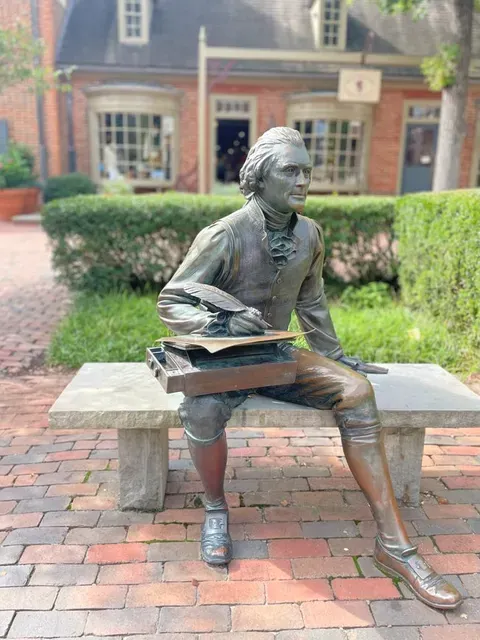
Jefferson statue, Merchant's Square, Williamsburg, Virginia.
Closing words from history.
The full transcription of Lee resolution leading to the creation of the Committee of Five.
Source: Founders' Archives. Click here to open in a new tab.
Resolution of Independence Moved by R. H. Lee for the Virginia Delegation
[7 June 1776]
Resolved
That these United Colonies are, and of right ought to be, free and independent States, that they are absolved from all allegiance to the British Crown, and that all political connection between them and the State of Great Britain is, and ought to be, totally dissolved.
That it is expedient forthwith to take the most effectual measures for forming foreign Alliances.
That a plan of confederation be prepared and transmitted to the respective Colonies for their consideration and approbation.
[On verso in several hands as indicated:]
Resolved that it is the opinion of this Committee tha[t] the first Resolution be postponed to this day three weeks and that in the mean time least any time should be lost in case the Congress agree to this resolution a committee be appointed to prepare a Declaration to the effect of the said first resolution.
Are you enjoying this free blog? I love writing and researching it! Use my online tip jar to help keep me going... buy me a coffee:

There is a huge practical disclaimer to the content on this blog, which is my way of sharing my excitement and basically journaling online.
1) I am not a historian nor an expert. I will let you know I’m relaying the information as I understand and interpret it. The employees of Colonial Williamsburg base their presentations, work, and responses on historical documents and mainly primary sources.
2) I will update for accuracy as history is constant learning. If you have a question about accuracy, please ask me! I will get the answer from the best source I can find.
3) Photo credit to me, Daphne Reznik, for all photos in this post, unless otherwise credited! All photos are personal photos taken in public access locations or with specific permission.